St. Wilgefortis, Pilgrimage church in Neufahrn bei Freising, Germany
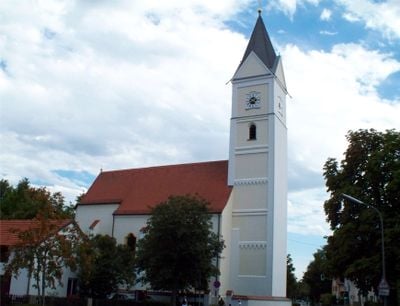
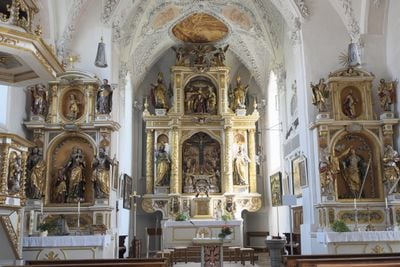
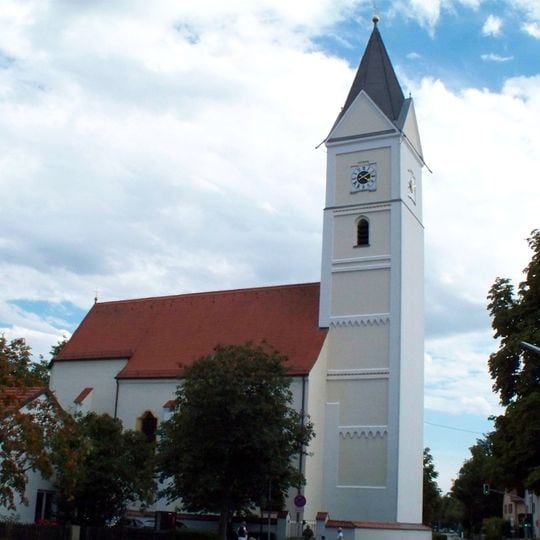
St. Wilgefortis is a Gothic church from the mid-15th century, baroquified around 1715, with a tall square tower topped by a dark grey pyramidal spire and a golden orb. The nave has a steep red tiled roof and a small entrance porch on the south side. Inside, the single nave is divided into three bays, and the choir has a five-eighth closure.
The church is first documented in the early 9th century and belonged to the Benedictine abbey of Weihenstephan from 1354 to 1803. The present building was erected in the mid-15th century and consecrated in 1499; the tower, originally five storeys, probably dates from the early 14th century. A fire around 1580 damaged the Wilgefortis cross, and the interior was baroquified in 1715. The tower was heightened in the mid-19th century.
The church's name comes from a bearded figure in a long robe and golden crown, reinterpreted around 1700 as Saint Wilgefortis, a king's daughter whose face grew a beard to avoid marriage. Gothic panels in the choir and Florian Chapel show loggers finding the image floating upstream on the Isar and carrying it by oxcart to Neufahrn.
The building is located on Dietersheimer Straße and is accessible to visitors, with opening hours available through inquiry at the Archdiocese of Munich. Those planning a visit should check ahead, as hours may vary with the season.
The crucifix venerated here as the Wilgefortis cross is a Romanesque sculpture from the 12th century, probably brought from Weihenstephan Abbey at the end of the 14th century. Around 1700 the bearded figure in a long robe and golden crown was reinterpreted as Saint Wilgefortis. Gothic panels in the choir and the Florian Chapel show loggers finding the image floating upstream on the Isar and carrying it to Neufahrn by ox cart.
The community of curious travelers
AroundUs brings together thousands of curated places, local tips, and hidden gems, enriched daily by 93,606 contributors worldwide.