Garchinger Heide, Protected natural area in Eching, Germany
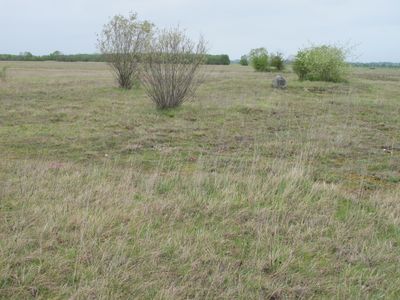
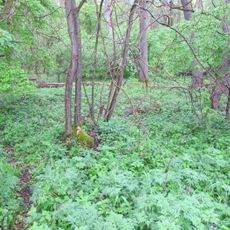
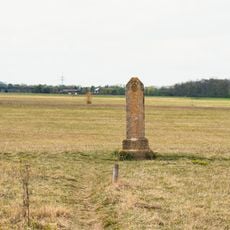
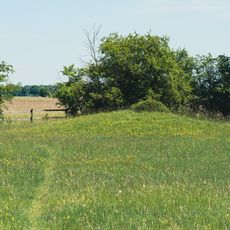
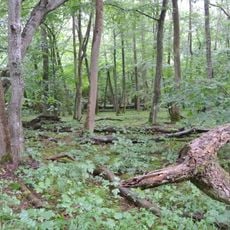
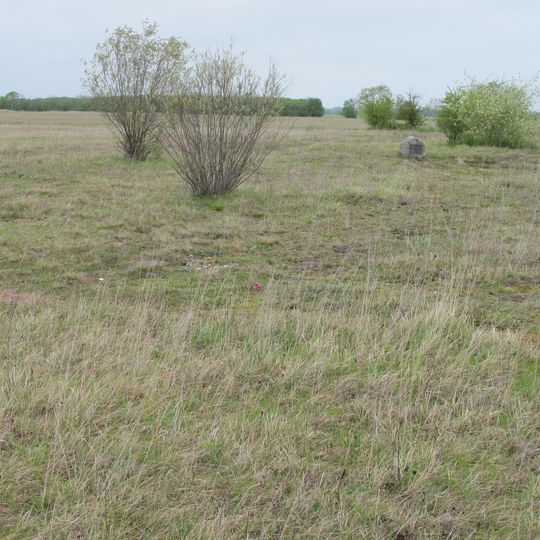
Garchinger Heide is a 27-hectare nature reserve southeast of Eching in the Freising district, Bavaria, on gravel of the Munich gravel plain. Its low-growing calcareous dry grassland is broken only by scattered hedges and shrubs. Two Bronze Age burial mound groups lie in the northeast and southeast, and ridge-and-furrow fields from the early Middle Ages survive in the east.
The Bavarian Botanical Society began securing the land from 1908 onward to protect its rare plant life. The area received official conservation status in 1942 and has been under protection ever since.
The Garchinger Heide is one of the few places in Bavaria where visitors can see the finger pasque flower in bloom, a small plant with violet petals. Birds and insects that have become rare elsewhere can be spotted along the paths here.
The reserve lies on the gravel plain south-east of Eching in the Freising district; the 27.13 ha area, of which 26.89 ha is protected, is reached on foot from the surrounding fields. Two Bronze Age burial mound groups stand in the north-east and south-east, and the remains of early medieval ridge fields (Hochäcker) are visible in the east. In the last months of the war in 1945, forced labourers from Dachau concentration camp began stripping the top gravel layer by hand for a 40 m wide, 300 to 400 m long runway for Schleißheim military airfield; the roughly 1 m² rifle pits dug beside it are still half a metre deep.
The reserve protects the only German site of the finger pasque flower (Pulsatilla patens), listed under Annex II of the EU Habitats Directive. Two Bronze Age burial mound groups lie in its northeast and southeast, and early medieval ridge-field remains survive in the east.
The community of curious travelers
AroundUs brings together thousands of curated places, local tips, and hidden gems, enriched daily by 92,677 contributors worldwide.