Wasserburg Seligenstadt, Water castle in Seligenstadt, Germany
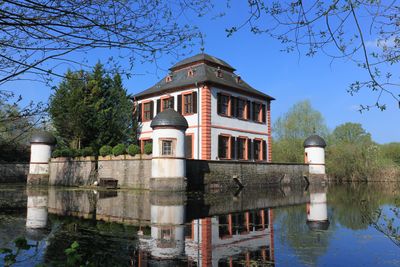
Wasserburg Seligenstadt is a two-storey pleasure palace built around 1700 on a small island near the Main. It follows the layout of a late medieval castle with a moat, drawbridge and four small corner towers, but lacks the fortifications of a real fortress. The original corner turrets are gone, and the surrounding Baroque garden has disappeared.
The castle was built around 1700 by Abbot Franziskus II Blöchinger on the remains of an older fortress that was destroyed during the Thirty Years War. The new Baroque building marked the monastery's recovery after decades of conflict.
The castle served as a summer retreat for the abbots of Seligenstadt, who received guests and rested away from the monastery during the warmer months. The surviving rooms give a sense of how senior clergy of that era lived outside their religious duties.
The castle sits close to the center of Seligenstadt and is easy to reach on foot. It also lies along the Kurmainzer Herz cycling route in the Rhine-Main Regional Park, making it a natural stop during a day trip by bike.
Above the entrance, an inscription in German reads: 'This house is in God's hand; it is called the water castle.' The phrase shows that the building was meant as an expression of faith, not only as a place to live.
The community of curious travelers
AroundUs brings together thousands of curated places, local tips, and hidden gems, enriched daily by 95,696 contributors worldwide.