Weißenburgpark, Public park on hilltop in Stuttgart, Germany.
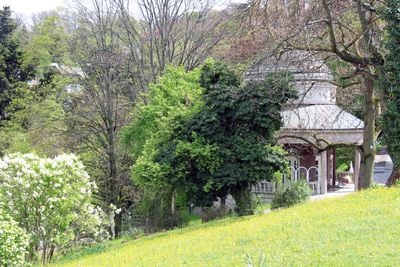
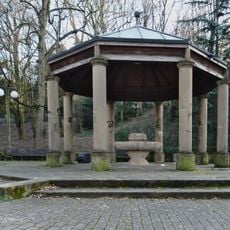
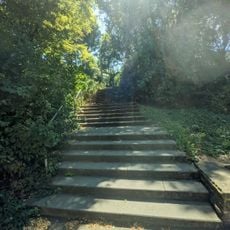
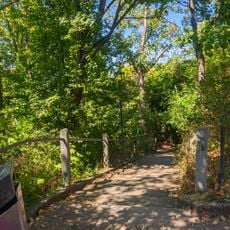
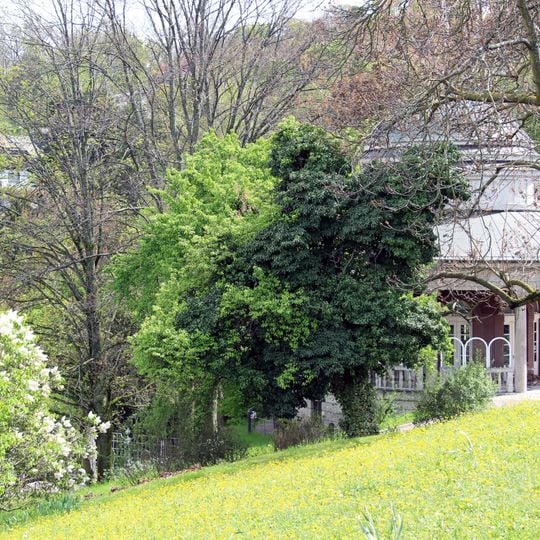
Weißenburgpark is a park on a hilltop in Stuttgart with multiple terraced levels, stone pathways, and landscaped gardens. The grounds feature a white teahouse building with a marble hall beneath it and offer views of downtown.
A medieval castle of the Counts of Württemberg stood on this hill until its destruction in 1312; no trace remains. In 1843/1844 Albert Föhr built a classicist villa and laid out a park. Ernst von Sieglin acquired the property in 1898, had the park redesigned, and in 1912/1913 added the Teehaus and Marmorsaal. His heirs sold it to Stuttgart in 1956; the villa was demolished in 1964.
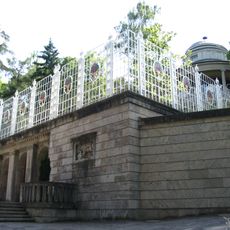
The name Weißenburg refers to a medieval castle of the Counts of Württemberg on this spot, destroyed in 1312 and leaving no remains. The Marble Hall, built in 1913, was already used as a festival hall by the Sieglin family; after renovation between 1988 and 1992 it again hosts public concerts, private celebrations and civil weddings. Its interior was painted by Julius Mössel with grotesque scenes of water deities and animals, fitting a building that recalls an ancient nymphaeum.
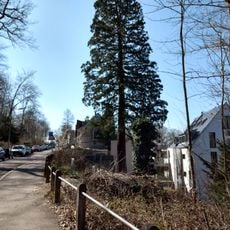
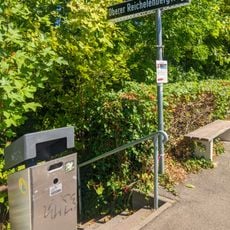
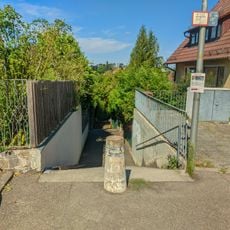
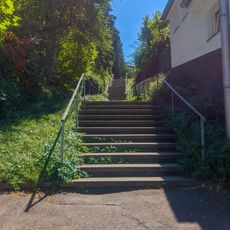
Weißenburgpark is reached via the Bopser stop on Stadtbahn lines 5, 6, 7 and 12; a few parking spaces sit on Bopserwaldstraße at the foot of the park. Paths and benches run through the grounds, and a viewing platform at the highest point, about 370 metres above sea level, looks over Stuttgart. The B 27 passes a few metres below, yet the park stays quiet.
The tennis court once stood on the roof of the Marmorsaal, visible from the Teehaus; only its lawn remains, now enclosed by a white ornamental grille made in 1913 by the firm Sachse & Rothmann, whose posts alternate diamonds and four cylinders and end in lidded amphorae.
The community of curious travelers
AroundUs brings together thousands of curated places, local tips, and hidden gems, enriched daily by 94,629 contributors worldwide.