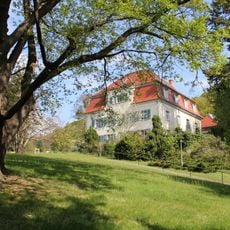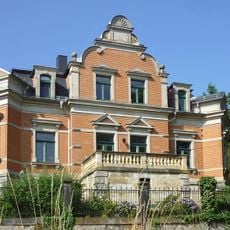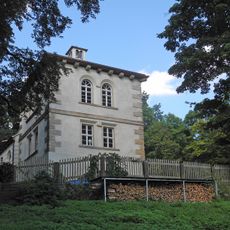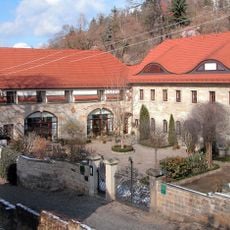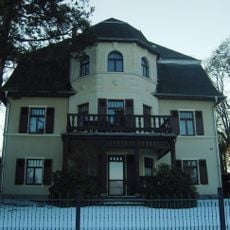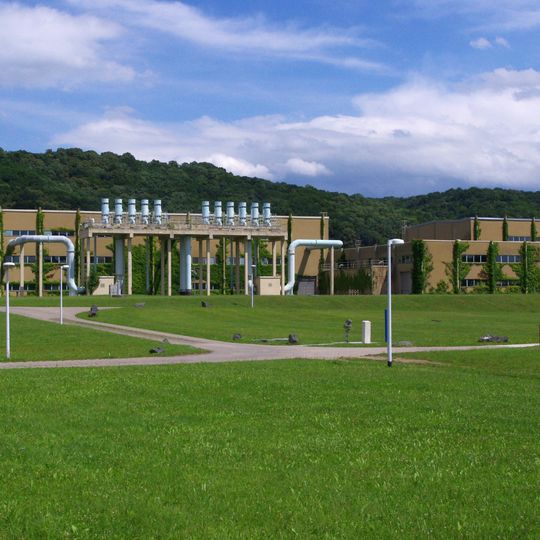
Wasserwerk Hosterwitz, Waterworks and heritage monument in Hosterwitz district, Dresden, Germany
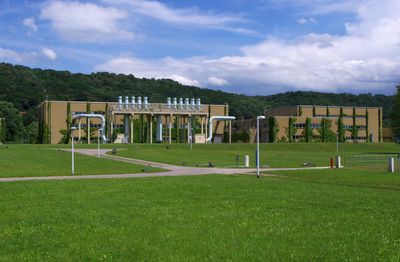
Wasserwerk Hosterwitz is a water treatment facility on the right bank of the Elbe River in a protected nature area of Dresden. The site combines original industrial buildings from the early 1900s with modern operational structures and draws from multiple water sources to supply the city.
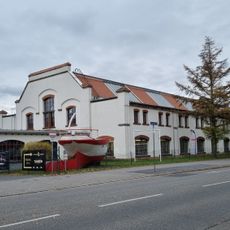
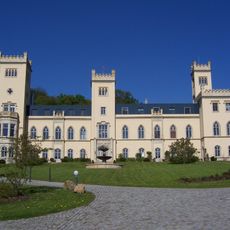
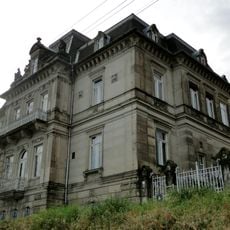
Hans Erlwein, Dresden's Stadtbaudirektor, designed the plant, which opened on 11 December 1908 after about eighteen months of construction as the city's third waterworks, after Saloppe (1875) and Tolkewitz (1898). It initially drew bank-filtered groundwater and pumped it straight into Dresden's distribution network. Between 1928 and 1930 the plant was extended, adding gravel-bed infiltration of Elbe water and a new filtration stage, and steam power was replaced by electricity.
The old filter hall now houses a branch of the DVGW water technology centre, where architect Eberhard Pfau built a house within a house; the old roof rises well above the new office block. The former machine house still holds pumps supplying Dresden's higher districts such as Weißig.
The facility sits in a protected nature area and can be viewed from outside, though the operational areas are not open to public tours. The best approach is to appreciate the exterior of the heritage buildings and explore the surrounding paths along the river.
The plant draws its raw water from three sources: natural bank filtrate, artificially infiltrated Elbe water, and landside groundwater. According to the source, this combination is unique among Dresden's waterworks. The 144 wells still in use today mostly date from 1932 to 1934, reach depths of up to 22 metres and each yield about 100 cubic metres per hour.
The community of curious travelers
AroundUs brings together thousands of curated places, local tips, and hidden gems, enriched daily by 92,720 contributors worldwide.