Höhle ohne Namen, Natural cave in Steinamwasser, Auerbach, Germany
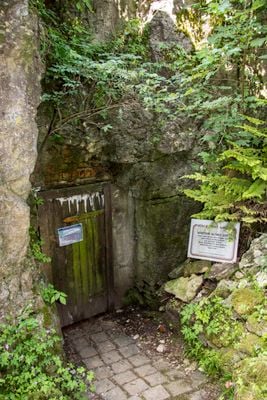
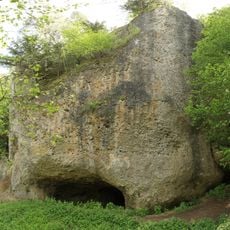
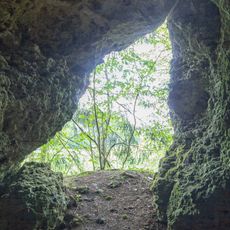
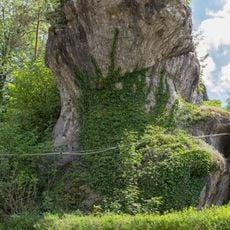
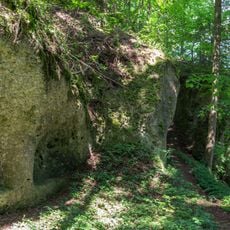
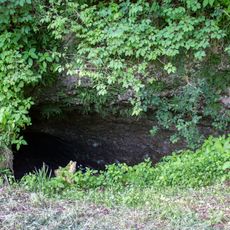
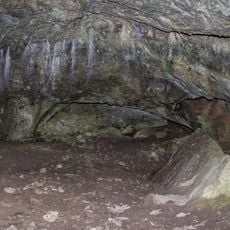
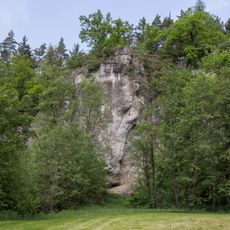
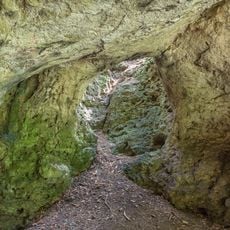
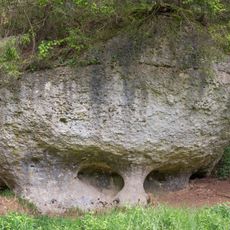
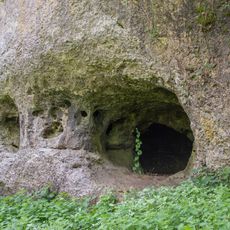
The Höhle ohne Namen is a fissure-bound horizontal karst cave in the dolomite of the Zwillingsfels in Steinamwasser, a district of Auerbach in der Oberpfalz. Its passages total over 500 metres and form a branching system with halls up to 12 metres high and 8 metres wide, alongside narrow squeezes, deep fissures and collapse zones. Named sections include the Flemmbachhalle, Julius-Rühm Klamm, Fridasee, Weiße und Wasser-Spalte, Karfreitagskluft and Spöckerhalle.
The cave was first documented in 1844 and later attracted attention when excavations took place in 1859. Those early investigations uncovered prehistoric remains, though their authenticity has been questioned ever since.
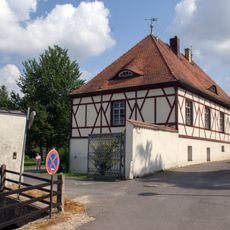
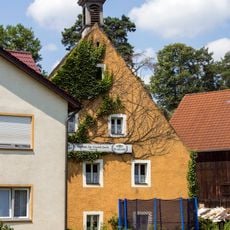
The cave's name, Höhle ohne Namen, has never been officially changed, though attempts were made to rename it after the cave researcher Richard Spöcker. Today the front section serves as a drinks store for the innkeeper of "Zur frischen Quelle", and the cave hosts cultural events alongside recreational caving.
Access to the cave requires permission from the local innkeeper, and only the entrance area is easily accessible to visitors. Exploring deeper passages demands specialized caving gear, proper training, and experience in cave exploration.
The cave's name has stayed unofficial despite attempts to rename it after the cave researcher Richard Spöcker. In 2004 it hosted the first large-scale exercise of German cave rescuers, and the front section is used by an innkeeper to store drinks.
The community of curious travelers
AroundUs brings together thousands of curated places, local tips, and hidden gems, enriched daily by 93,559 contributors worldwide.