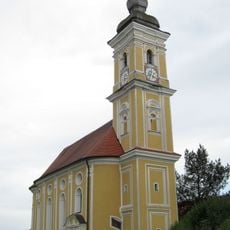
Schloss Aufhausen, Architectural heritage monument in Erding, Germany
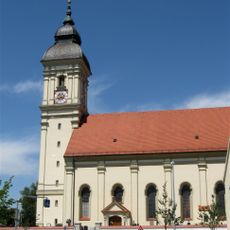
Schloss Aufhausen is a three-story cubic castle building with a mansard roof, built in its essentials in 1596 and enlarged around 1720, probably by Hans Kogler. A chapel dedicated to St. Magdalena adjoins it; Johann Baptist Lethner reworked the chapel in 1760. At the end of the 19th century, farm buildings were added to form a four-sided courtyard, and a historic bowling alley from 1897 survives.
Schloss Aufhausen was first recorded in 788 as "Ufhusa", when the estate was given to Mondsee Abbey with the consent of Duke Tassilo III. The core of the present castle was built in 1596 and enlarged around 1720 into a three-storey cubic building with a mansard roof, probably by Hans Kogler, who added the St. Magdalena chapel. From 1774 it belonged to Count Max von Preysing, who sold it in 1817 to the lawyer Michael Nikolaus Ludwig von Auer; his family took the title Auer von Aufhausen in 1832.
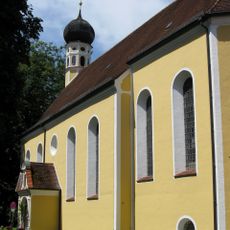
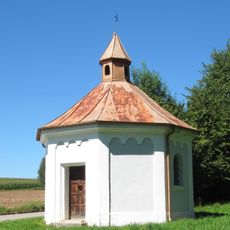
The chapel shows how faith and architecture were connected in 18th century Bavaria. You can still see how this space was used for private prayer and worship.
Schloss Aufhausen is a private estate in Aufhausen near Erding, not a publicly visitable castle; the owners live on site. Some rooms, the St. Magdalena chapel and the historic 1897 bowling alley can be rented for events, so access is by arrangement only. Visitors should not expect opening hours or guided tours of the interior.
The estate's 1832 noble title "Auer von Aufhausen" was derived directly from the castle's name. The family's eldest son Max von Auer, a Landtag deputy, inherited the property in 1835; his widow sold it in 1883 to banker Christoph Robert von Froelich, who became the first chairman of Bayerische Vereinsbank.
The community of curious travelers
AroundUs brings together thousands of curated places, local tips, and hidden gems, enriched daily by 94,307 contributors worldwide.