Burg Natternberg, Medieval castle ruins in Deggendorf, Germany
Burg Natternberg is a ruined hilltop castle on the 375-metre Natternberg north of Deggendorf. Its rectangular 230-metre-long, 40-metre-wide layout is divided by a wall; the southeast corner holds a square main tower (bergfried) with nine-metre sides and three-metre-thick walls, now topped by a pyramid roof added around 1900. Wall remnants, cellar vaults and the so-called Schlösschen of the 18th century survive, and excavations in 1997/98 uncovered the foundations of a Romanesque church with a round apse built against the southern wall.
The castle was first mentioned in 1145 in a document from Windberg Monastery as the seat of Hartwig von Natternberg, a ministerialis of the Counts of Bogen. After the Bogen line died out in 1242, the property passed to the Wittelsbachs, who made it the seat of a pfleger. In 1357 Peter von Egg, field captain of Emperor Louis the Bavarian, had to return Natternberg to the duke after a year-long siege.
The name refers to vipers, snakes that once lived in the area and shaped local perception of the place. Today visitors can see how the castle's location on the hill connected to this natural feature of the landscape.
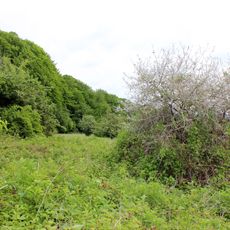
The ruin is freely accessible at all times. The site stretches 230 metres along the ridge and is divided by a wall; the main tower stands in the southeast corner, the remains of the second tower in the northeast. The terrain is uneven, with cellar vaults and wall remnants.
The castle's name comes from a legend: the devil dropped a huge rock he was carrying to dam the Danube and flood Metten; the rock became the hill, soon infested with snakes (Nattern), giving Natternberg its name. Locals say the handles of the devil's wheelbarrow are still visible on the rock.
The community of curious travelers
AroundUs brings together thousands of curated places, local tips, and hidden gems, enriched daily by 92,796 contributors worldwide.