Germany–Poland border, International border between Germany and Poland in Central Europe.
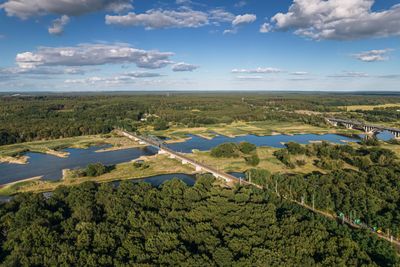
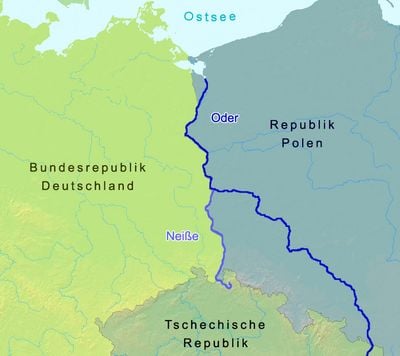
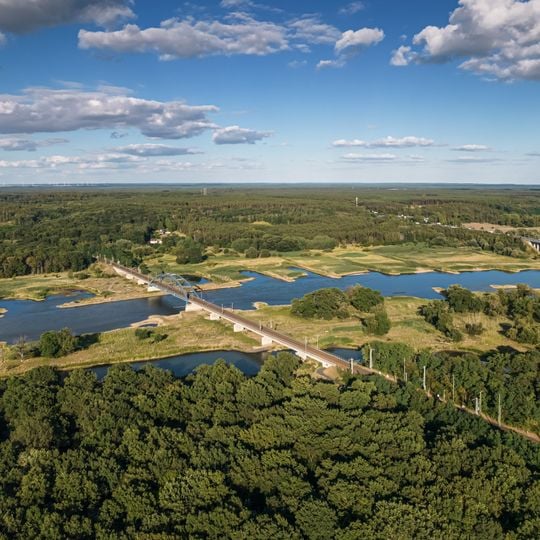
The border with Poland runs 467 kilometers (290 miles) from the Baltic coast to the tripoint with the Czech Republic, following the course of the Oder and Lusatian Neisse rivers for most of its length. The northern section crosses the Bay of Pomerania and Usedom lagoons before the land boundary traces the waterways southward.
The line emerged in 1945 at the Potsdam Conference when Allied powers designated the Oder and Neisse as Poland's new western boundary after the nation lost eastern territories to the Soviet Union. Before World War II these areas lay within Germany and the German-Polish boundary ran farther east.
Twin towns such as Frankfurt (Oder) and Słubice or Görlitz and Zgorzelec share footbridges where residents cross frequently for shopping, dining, or attending concerts and street markets. These divided settlements display bilingual signs and hold joint festivals that show German and Polish customs side by side.
Travelers within the Schengen Area usually cross without checks, though occasional police patrols may ask for documents, especially at smaller rural crossings or during heightened security measures. Many crossing points run over highway bridges and village roads, so pedestrians and cyclists often face only a short walk to the nearest passage.
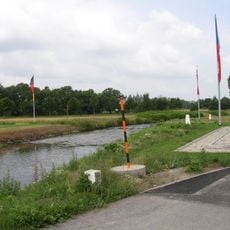
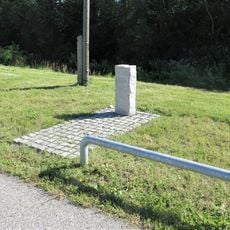
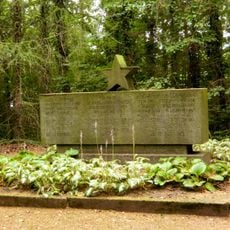
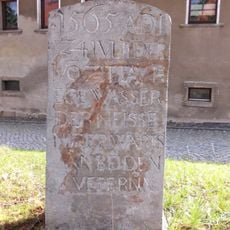
Some border bridges pass straight through historic market squares, so visitors can stroll from a café on the German bank to a Polish bakery a few steps away. At certain river sections only discreet signs or small memorial stones mark the shift between both countries, with no fences or barriers in sight.
The community of curious travelers
AroundUs brings together thousands of curated places, local tips, and hidden gems, enriched daily by 91,861 contributors worldwide.