Saint Anne Chapel, Gothic chapel in Jever, Germany
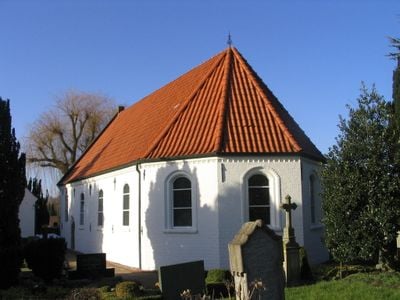
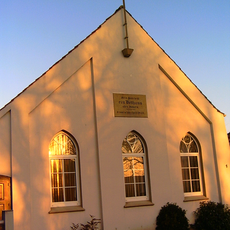
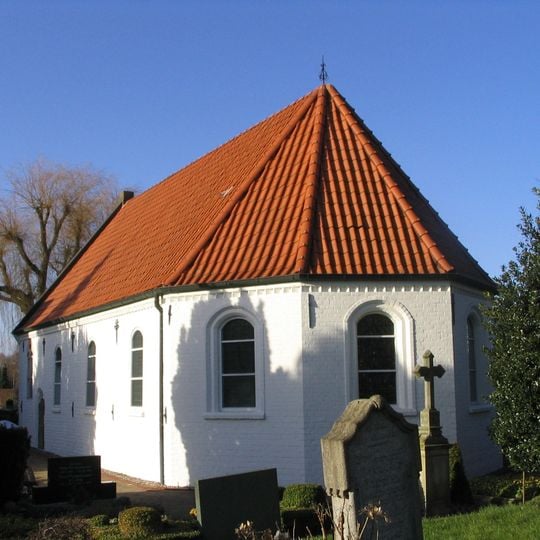
Saint Anne Chapel is a white brick chapel with a steep, orange-red tiled pyramidal roof topped by a small metal finial. Shallow pilasters divide the walls, and tall round-arched windows with gridded panes light the interior. The polygonal apse has three windows, one on each facet, and a dark gutter line runs beneath the overhanging eaves.
A predecessor building stood on or near the site before 1610; the chapel itself is documented from the end of the 15th century, and its founding date is uncertain. It was built as a suburban church, reportedly using stones from the demolished monastery church at Oestringfelde. The polygonal choir end was probably added in 1660, and a 1931 renovation removed the pulpit and nearly all other wooden fittings.
The chapel continues to serve worshippers today and shows how local people adapted Gothic style for their sacred space. It represents the religious life of a community that gathered here for prayer and devotion.
The chapel stands on the left side of the road to Wittmund, behind a tall cemetery hedge, outside the historic town centre. There are no cloisters; the surrounding ground is a cemetery. The interior is a single hall 16 metres long and 7 metres wide, so a visit takes little time.
The chapel's oldest artwork is the St. George Altar, a small winged altarpiece whose four carved panels show scenes from the saint's legend and probably came from the circle of the Master of Osnabrück around 1520. Its two painted wings, dated 1703, were reversed in 1950 so the paintings face outward.
The community of curious travelers
AroundUs brings together thousands of curated places, local tips, and hidden gems, enriched daily by 93,244 contributors worldwide.