Edo-Wiemken-Grabmal, Sepulchral monument in Jever, Germany
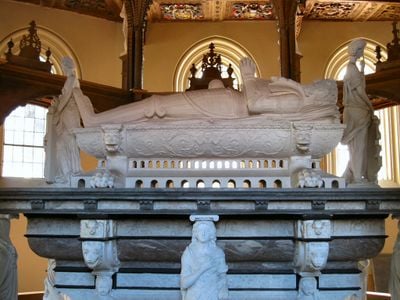
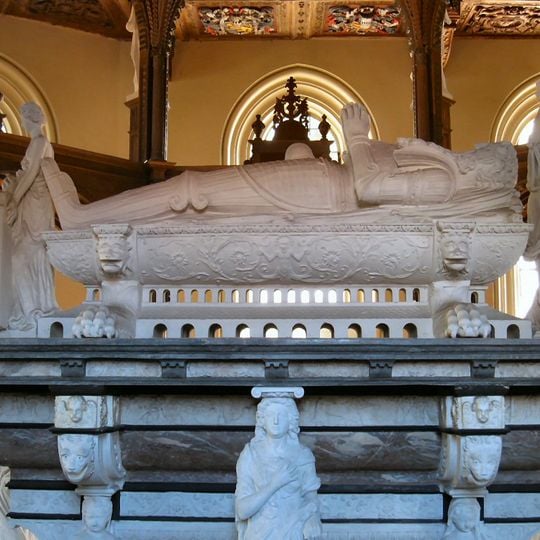
The Edo-Wiemken-Grabmal in Stadtkirche Jever is a white marble sarcophagus with ornamental details resting beneath a two-story wooden canopy. Carved figures serve as structural supports and create a distinctive visual presence within the church.
Maria von Jever had the memorial built in the church choir between 1561 and 1564 as a burial chapel for her father, Edo Wiemken the Younger, the last male ruler of the Jever lordship. The sculptor Heinrich Hagart, a pupil of Cornelis Floris II of Antwerp, created it. A stone wall later enclosed it, and it survived the church fires of 1728 and 1959.
The wooden carvings above the sarcophagus feature figures representing different human virtues, emphasizing the status of the deceased. These sculptures reflect the artistic traditions of Antwerp and remain a distinctive visual element of the memorial.
The memorial is freely accessible during regular church hours without requiring advance booking. The church is centrally located in Jever and can be easily reached on foot.
The monument is a cenotaph: Edo Wiemken's remains lie in a chamber beneath it, not in the marble sarcophagus. On 5 June 2025 the vault below was opened for the first time in 140 years, and it is thought to hold the grave of Maria von Jever.
The community of curious travelers
AroundUs brings together thousands of curated places, local tips, and hidden gems, enriched daily by 92,796 contributors worldwide.