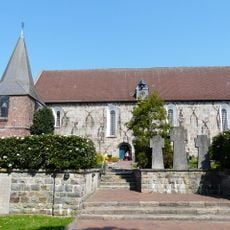
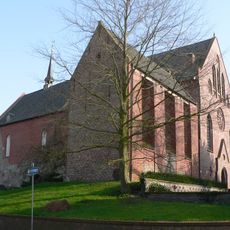
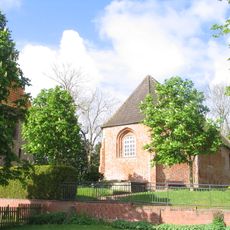
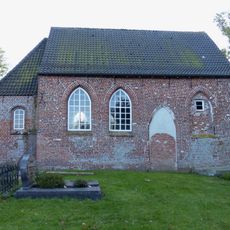
St. Sixtus und Sinicius, Romanesque church in Hohenkirchen, Wangerland, Germany.
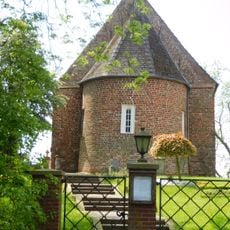
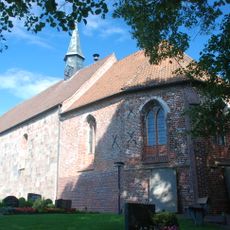
St. Sixtus und Sinicius is a granite church with massive walls, semi-circular arches, and rounded windows standing on a six-meter-high mound. The building measures 33 meters long and 13 meters wide, displaying Romanesque style with robust structures that have survived to the present day.
The church was originally founded as a wooden structure by Saint Ansgar in the 9th century, with the current stone building constructed around 1143. Its placement on an elevated mound reflects medieval building practices and the importance of the location in the early Christianization of the region.
The altar from 1620 displays elaborate carvings by Ludwig Münstermann with religious scenes that show the craftsmanship of that era. The church serves today as a gathering place for community events and worship, with the altar embodying the cultural memory of the place.
The best time to visit is during regular religious services and community events, when the church is open and accessible. The building is located in the municipality of Wangerland and is easily reached by those interested in Romanesque architecture and local history.
The baptismal font from 1260 is the oldest element within the building and features relief carvings, particularly depicting the baptism of Christ. Many visitors overlook this finely crafted piece, which creates a direct link between the church's early medieval origins and its presence today.
The community of curious travelers
AroundUs brings together thousands of curated places, local tips, and hidden gems, enriched daily by 90,985 contributors worldwide.