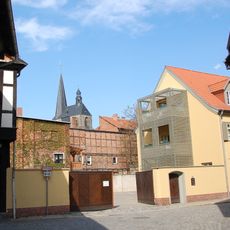
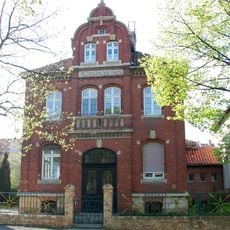
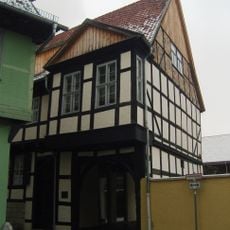
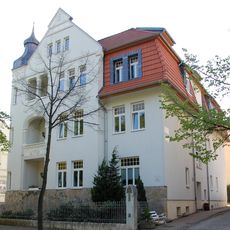
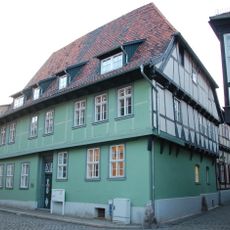
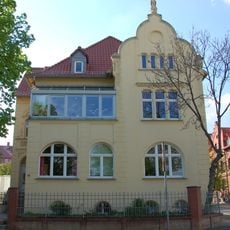
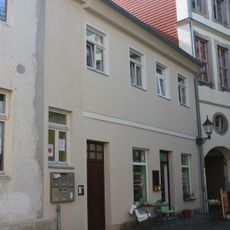
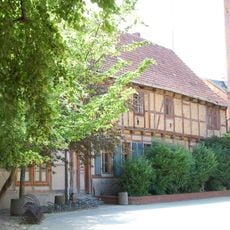
Lindenbeinsche Villa, building in Quedlinburg, Germany
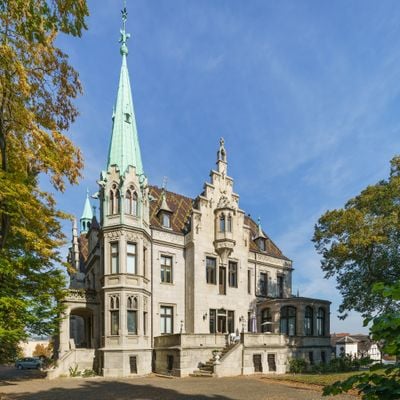
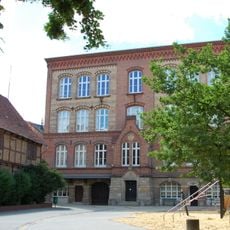
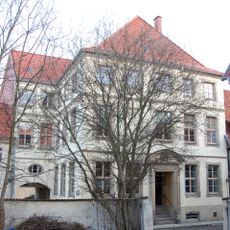
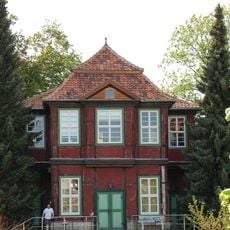
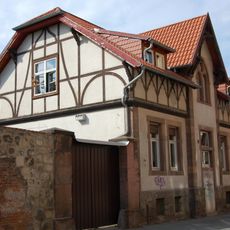
The Lindenbeinsche Villa is a Neogothic building built in 1898 that stands on a large plot next to Quedlinburg's city wall. The stone house has a roof with battlements and turrets, white windows, and a garden with old trees such as ginkgos and pines.
Georg Lindenbein, a retired industrialist, had the villa built from 1898 to a design by architect Friedrich Staeding; construction was completed in 1904. His family owned it until 1941, and it survived World War II largely undamaged. In 1945 the Soviet commandant's office moved in; from 1965 the Kaiser & Co. weaving mill installed heavy machinery, removing balconies and damaging interiors. After later uses as a crafts house and a German-Soviet friendship house, it stood empty from 1989 until the Wobst family bought it in 1995 and restored it over six years.
The villa takes its name from the Lindenbein family, who shaped the building in the early 20th century. Visitors can see original wall paintings, decorated tiles, and fireplaces inside that show how wealthy families of that era lived and decorated their homes.
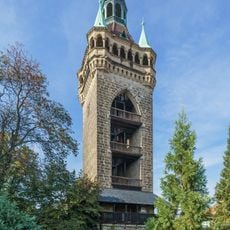
The villa stands at Wallstraße 96 on the east side of the street, west of the old town, with Quedlinburg's historic city wall running directly behind it; the Lindenbein Tower is just to the north and the Powder Tower also belongs to the grounds. The house now runs as the Schlosshotel Zum Markgrafen with twelve rooms, a restaurant, cafe, wine cellar and bar, so non-guests can eat or drink there. The 12,000 m² park, replanted with its original path layout during the six-year restoration, is worth a walk.
When built, the house was technologically advanced with its own electric lighting generator, hot and cold water in all bathrooms, and an internal telephone system connecting rooms. A particularly large ginkgo tree from the house's founding era still grows in the garden today.
The community of curious travelers
AroundUs brings together thousands of curated places, local tips, and hidden gems, enriched daily by 94,528 contributors worldwide.