Schloss Piesing, castle in Haiming, Bavaria, Germany
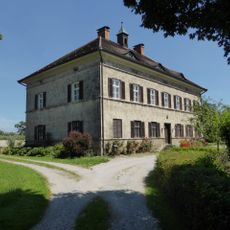
Schloss Piesing is a baroque manor house in Haiming, Bavaria, featuring a rectangular shape, two stories, and traditional roof design. The building displays craftsmanship from the early 1700s and sits within landscaped grounds that evolved from formal baroque gardens into a more natural park setting.
Piesing began as a settlement founded by a man named Puso between 520 and 700. The Offenhaimer family held the estate from 1489 to 1571; Kaspar Offenhaimer received imperial knightly freedom in 1536 and Hofmark jurisdiction in 1541. The first castle, probably wooden, was completed by Caspar Offenhaimer in 1548 and burned down completely in 1600. Carl Adam von Freyberg commissioned a complete rebuild from Martin Pöller in 1726. The von Ow family has resided at Piesing since 1869.
The name Piesing goes back to a "-ing" settlement founded between 520 and 700 by a man named Puso. From 1497 a family on the Piesing farm took the place name as its own surname, Piesinger. The lords of Piesing held the right to run a market in their Hofmark, granted with the Hofmarkgerechtigkeit of 1541.
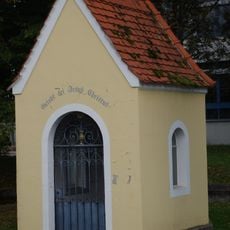
The castle is a private residence of the von Ow family and is not open for regular visits, so view it from the public paths around the grounds. The baroque garden was relaid in the English style in the 19th century; look for the 18th-century Johannes Nepomuk wayside shrine there. The chapel Maria Hilf and the library both date from 1901.
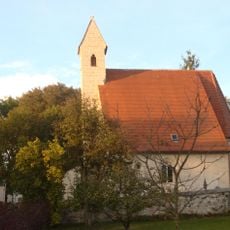
The chapel Maria Hilf beside the castle is a neo-baroque building of 1901 crowned by an onion dome, and the separate library wing, a neo-baroque mansard-roofed structure, dates from the same year. In the castle garden, reworked in the English style in the 19th century, stands an 18th-century wayside shrine of John of Nepomuk.
The community of curious travelers
AroundUs brings together thousands of curated places, local tips, and hidden gems, enriched daily by 94,302 contributors worldwide.