Schloss Weil, Cultural heritage château in Bavaria, Germany
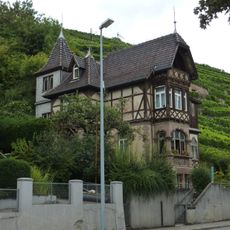
Schloss Weil is a château in Bavaria, Germany, featuring a distinctive gatehouse entrance and surrounding park areas. The estate includes garden spaces and a structured layout that combines residential areas, utility zones, and open grounds.
A Dominican convent stood on the site from 1230 until its forced dissolution in 1558. In 1817 King Wilhelm I of Württemberg established a stud farm here, and in 1818 the Florentine architect Giovanni Salucci built the two-storey country palace, his first commission for the House of Württemberg. After decay following the Second World War, the Stuttgart doctor couple Lambeck bought it in 1969 and had it restored until 1972; further restorations followed in 1997 and 2003, and a Fellbach businessman acquired it in November 2016.
The site began as a Dominican convent founded around 1230 and dissolved in 1558; the name Weil stayed with the estate. King Wilhelm I of Württemberg turned the grounds into a stud farm in 1817, and the palace built the next year served that royal horse-breeding project. Inside, the former dining room keeps a wall painting of the Neckar landscape.
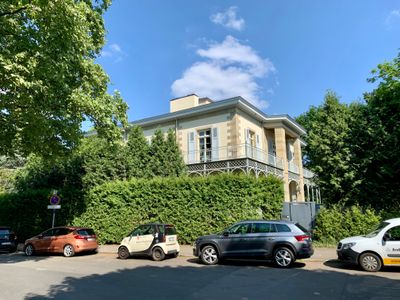
Schloss Weil stands in the Esslingen district of Weil, Baden-Württemberg, not Bavaria. It is a private building owned by a company since 2016, so visits are limited to viewing the exterior; the surrounding veranda and glass pyramid over the stairwell are best seen from outside. The site is a protected cultural monument of special significance.
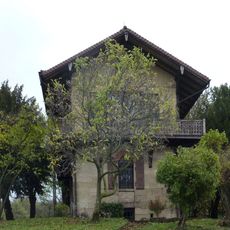
The two-storey building has a square plan with a portico on both the front and rear sides. Giovanni Salucci used cast-iron construction for the veranda running around the building and for the glass pyramid above the staircase, making it one of Württemberg's earliest buildings with cast-iron elements.
The community of curious travelers
AroundUs brings together thousands of curated places, local tips, and hidden gems, enriched daily by 94,050 contributors worldwide.