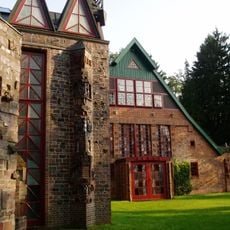
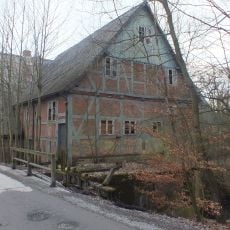
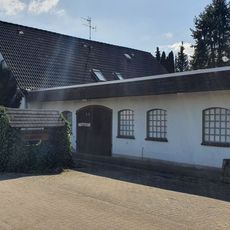
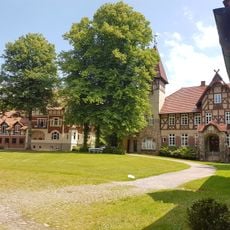
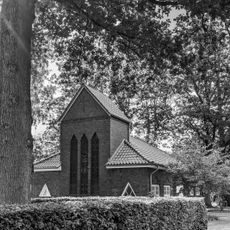
Holm Watermill, Watermill in Buchholz in der Nordheide, Germany.
Holm Watermill is a traditional grinding facility standing near the Seeve river, equipped with millstones and mechanical gears that once processed grain. The building shows how water power drove the machines and how different spaces were used for each step of milling.
Christoph von Hodenberg converted the village of Holm into a manor in 1567 and probably built a grain mill on the Seeve. A mill is first documented in 1615 through a dispute with the Bendestorf miller Tamke. In 1757 the mill was destroyed in fighting between Duke Ferdinand of Brunswick and the French, and Baron Ludwig Schenk von Winterstedt rebuilt it in 1758. The estate passed to the Kohrs family in 1938.
The mill's name comes from the Holm estate, which Christoph von Hodenberg turned into a manor in 1567. Members of the Geschichts- und Museumsverein Buchholz und Umgebung hold milling days with bread sales on the second Saturday of each month, and the upper floor hosts concerts, art exhibitions, readings and an annual craft market.
The mill is privately owned as part of Gut Holm; the Geschichts- und Museumsverein Buchholz und Umgebung e.V. has held a usage agreement since 1977. Milling days with bread sales and food for guests take place on the second Saturday of each month. The mill also hosts concerts, art exhibitions, readings and an annual craft market.
The mill is number 111 on the Niedersächsische Mühlenstraße. Its two working millstones are driven by an undershot metal water wheel, and a steel wheel was installed in 1993. In 2003 the Unterhaltungs- und Landschaftspflegeverband Seeve built a fish ladder beside the weir, and club members renewed the footbridge in front of it the same year.
The community of curious travelers
AroundUs brings together thousands of curated places, local tips, and hidden gems, enriched daily by 92,641 contributors worldwide.