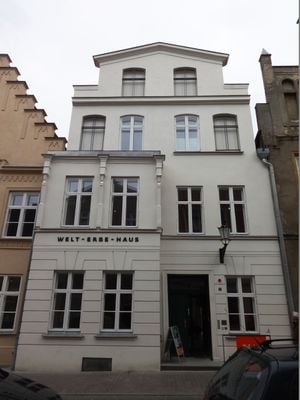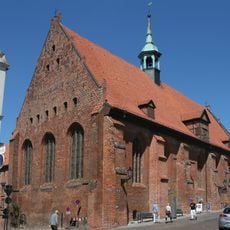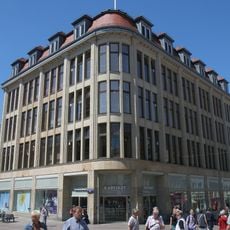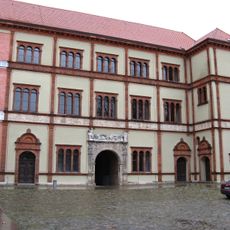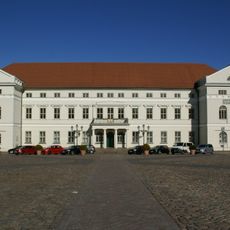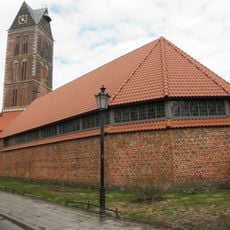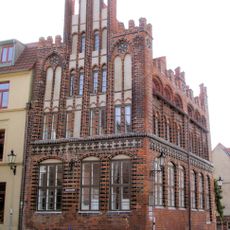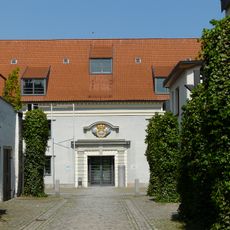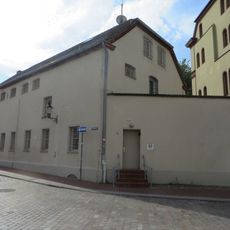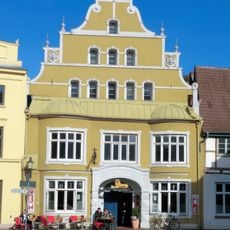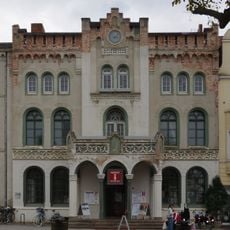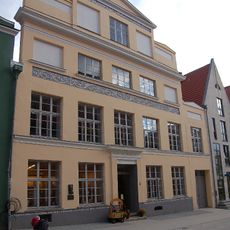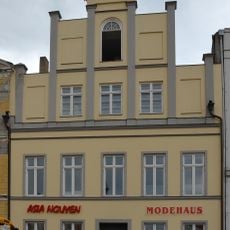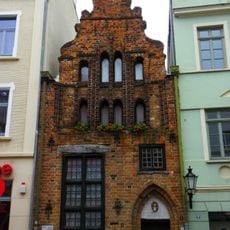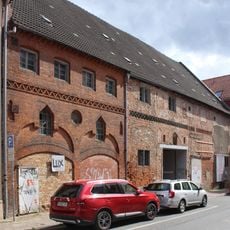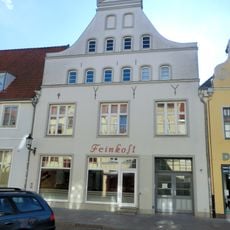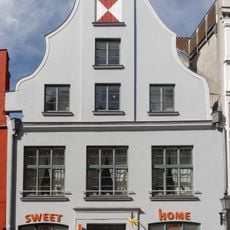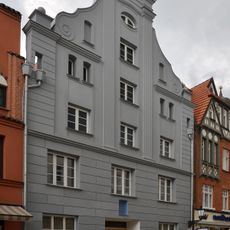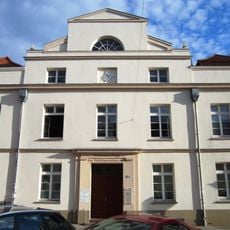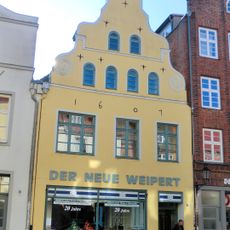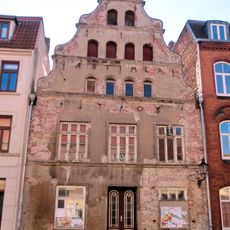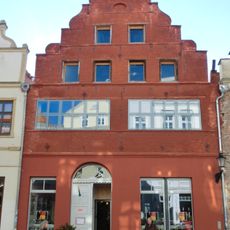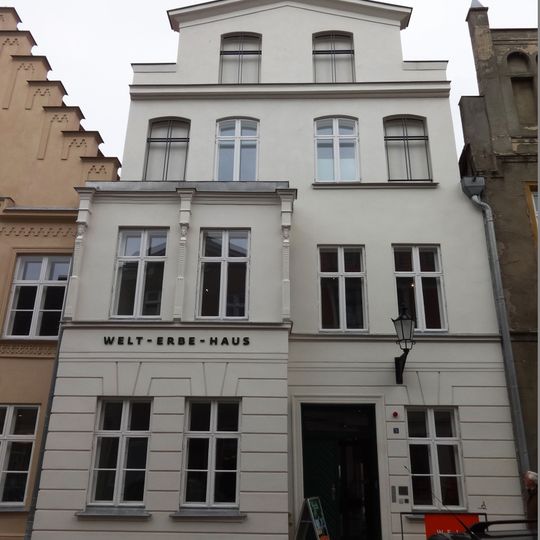
Welt-Erbe-Haus, Heritage visitor center in Wismar, Germany.
The Welt-Erbe-Haus is a listed Dielenhaus at Lübsche Straße 23, built around 1350, whose ground-floor hall served Hanseatic merchants for handling goods under tall windows facing street and courtyard. Since June 2014 it holds a 400 m² UNESCO World Heritage exhibition; the floor shows Wismar's old-town plan with the house highlighted, and the Kemlade wing holds finds and a wallpaper room.
The house was built around 1350 on Lübsche Straße, then part of a major trade route and the town's east-west axis; its ground-floor Diele served for handling goods. From the 17th to the 19th century owners converted it into a dwelling, lowering the hall ceiling. Mayor Gabriel Lembke lived here in the 19th century, a merchant company bought it in 1924, and the DDR Kulturbund used it from 1950 to 1990. After decay, the city secured it in 2004 and restored it in 2013–2014 for about four million euros.
The upper floor displays a restored room with French wallpapers showing a mythological journey. This decoration reveals how people once decorated their homes and what they valued in their living spaces.
The exhibition occupies the ground floor and continues into the Kemlade wing and the upper floor, where the wallpaper room lies. The courtyard shared with Lübsche Straße 23a holds a concrete water feature tracing Wismar's historic water supply. Allow roughly an hour for the displays.
During the 2013–2014 restoration, conservators uncovered a 17th-century stone wash basin set into a narrow, originally painted wall niche in a corner of the hall — the first find of its kind in Wismar. The courtyard water feature, about 6 by 5 metres, follows the town's 1710 water-supply plan.
The community of curious travelers
AroundUs brings together thousands of curated places, local tips, and hidden gems, enriched daily by 93,137 contributors worldwide.