Altenberg Pinge, Mining heritage monument in Altenberg, Germany
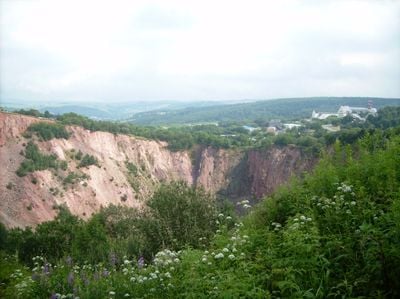
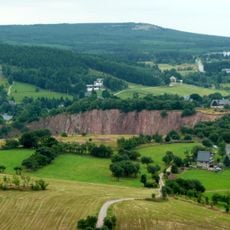
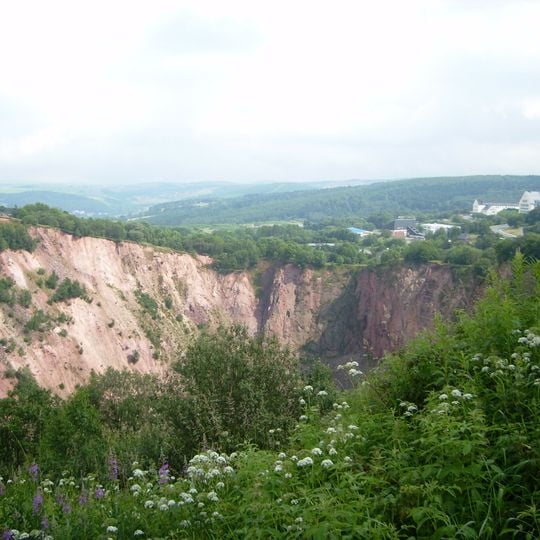
Altenberg Pinge is an open-pit collapse caused by tin mining, not a tunnel cave-in. Its steep walls of pale pinkish-red and grey rock drop to a shadowed floor; the rim is fringed with trees and houses stand about 50 m away. It measures roughly 440 m northwest to southeast and 380 m across, with a depth of 120 to 150 m.
The depression formed on January 24, 1620, when underground mining chambers collapsed beneath the surface. Centuries of tin extraction had weakened the rock below until it could no longer support itself.
The name Pinge comes from the miners' term for a collapse pit. The Aschergraben, a 7.4 km water channel built between 1452 and 1458, still runs nearby and once powered the ore-crushing mills. The border mining trail passes the rim today.
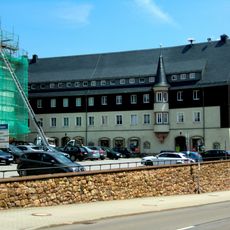
Access to the pit is possible only with a guide; there is no free walk down to the water. The Grenzüberschreitender Bergbaulehrpfad, a cross-border mining trail, runs through the surroundings and past the rim. Some houses of Altenberg stand only about 50 m from the edge, so the pit is reached on foot from the town centre.
The 1620 collapse swallowed four mines, their winding gear and the smith's house; 24 people were buried, 23 dug out alive, but 79-year-old David Eichler was never found. The shock was felt over 30 km away in Dresden.
The community of curious travelers
AroundUs brings together thousands of curated places, local tips, and hidden gems, enriched daily by 93,857 contributors worldwide.