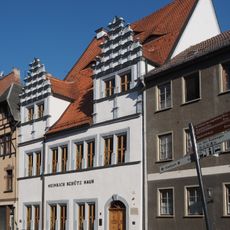
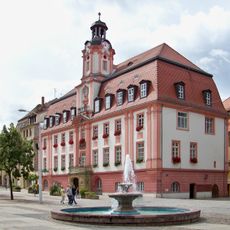
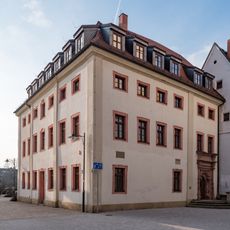
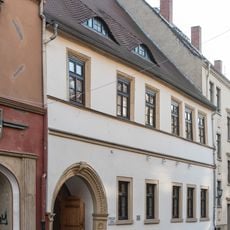
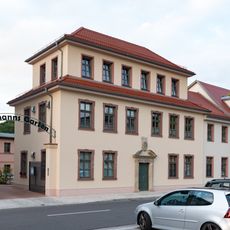
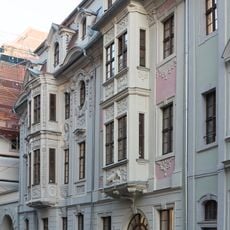
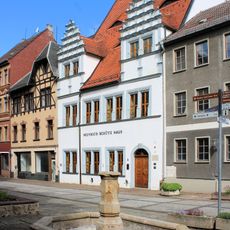
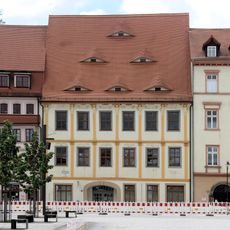
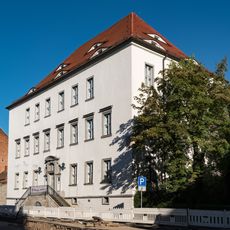
Museum Weißenfels, Local museum in Weißenfels Castle, Germany.
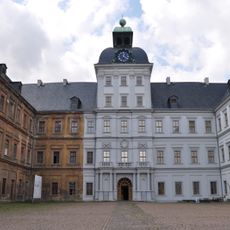
Museum Weißenfels is a local museum housed in Neu-Augustusburg, a baroque castle in the town. The museum displays nine thematic rooms with objects that document regional development and traditions.
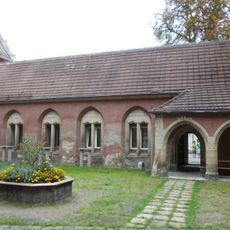
The museum traces its origin to the Verein für Natur- und Altertumskunde, founded on 4 July 1874 on the initiative of Rudolf Virchow, who had stayed in Weißenfels that May for an excavation. The society collected prehistoric finds and, under Alfred Junge from 1902, turned to local history. The town took over its collections and opened the museum in 1910 in the former St. Claren convent; in 1964 it moved to Schloss Neu-Augustusburg.
The collection includes shoes from East German production, commemorative ribbons, and artistic iron castings that show regional craftsmanship and industrial traditions. These objects reveal how local working traditions shaped the area's identity over time.
The museum occupies rooms in Schloss Neu-Augustusburg, where it moved in 1964; the baroque castle also holds the restored Fürstengruft, the ducal burial vault. The shoe collection and the cast-iron and Vivat ribbon displays are the three largest holdings, so plan the visit around them. The building was in poor condition for decades before later restoration work.
The museum's shoe collection includes footwear from ongoing GDR production from the 1950s onward, preserved as a complete series. The dukes of Saxony-Weißenfels kept their own court shoemaker, and footwear of the baroque nobility is also in the holdings.
The community of curious travelers
AroundUs brings together thousands of curated places, local tips, and hidden gems, enriched daily by 93,763 contributors worldwide.