Rittergut Bockerode, Manor estate in Springe, Germany
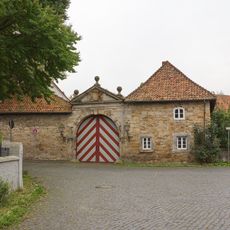
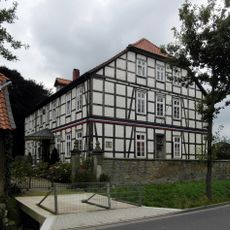
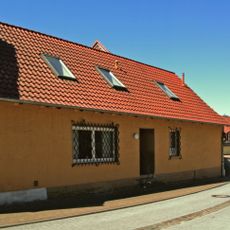
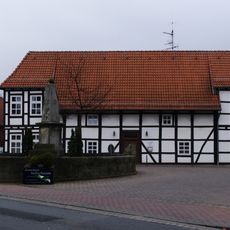
Rittergut Bockerode is a manor estate in Springe with a two-storey timber-framed Herrenhaus built in 1736 on the foundations of a castle destroyed by fire. The house has six window axes and a hipped roof with half-gables, and was extended in 1920/21. A second Herrenhaus from 1868, a farmyard and a gardener's house stand on the grounds.
The origins of this estate trace back to a property called tom Rode granted in 1448 by the Duchy of Brunswick-Lüneburg to the Lords of Frencke. The current mansion was built in 1736 on the foundations of an earlier structure that had previously stood on this location.
The Bockerode line of the Bock von Wülfingen family, named after the estate from 1557, produced officers and Hildesheim cathedral officials, including the lieutenant general Johann Friedrich Bock von Wülfingen. The timber-framed Herrenhaus of 1736 stands beside a second Herrenhaus built in 1868, and the whole ensemble is a protected monument.
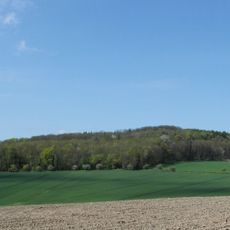
The estate lies southeast of the Mittelrode district, part of Springe in the Calenberg Land. The manor complex, farmyard and gardener's house are grouped together and the whole site is a listed monument; it is viewed from outside, as the farmyard and much of the land were sold after the Second World War. PotatoEurope took place here in 2006, 2010, 2014, 2018 and 2022, not on a fixed four-year cycle.
PotatoEurope took place at the estate in 2006, 2010, 2014, 2018 and 2022, so the interval between editions was four years. The estate covers 187 hectares, a figure recorded when Kurt Bock von Wülfingen, a colonel in Saxon service, held it.
The community of curious travelers
AroundUs brings together thousands of curated places, local tips, and hidden gems, enriched daily by 93,770 contributors worldwide.