Wasserburg Haus Glehn, Renaissance water castle in Glehn, Korschenbroich, Germany
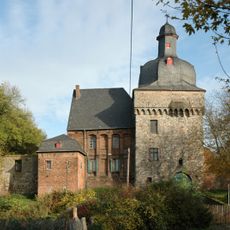
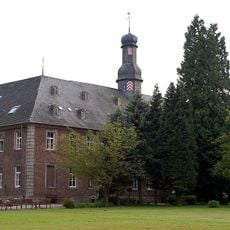
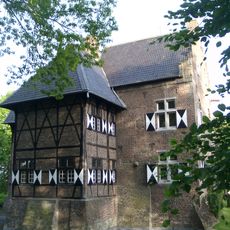
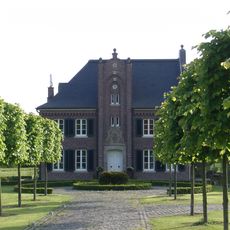
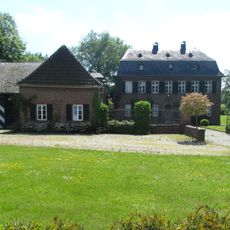
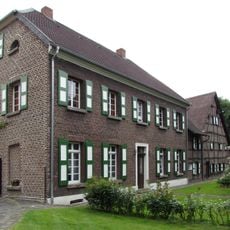
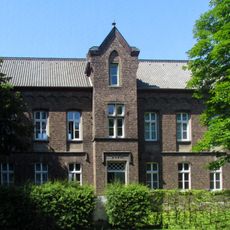
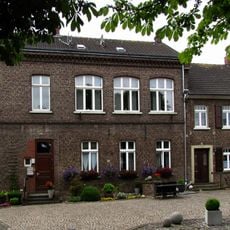
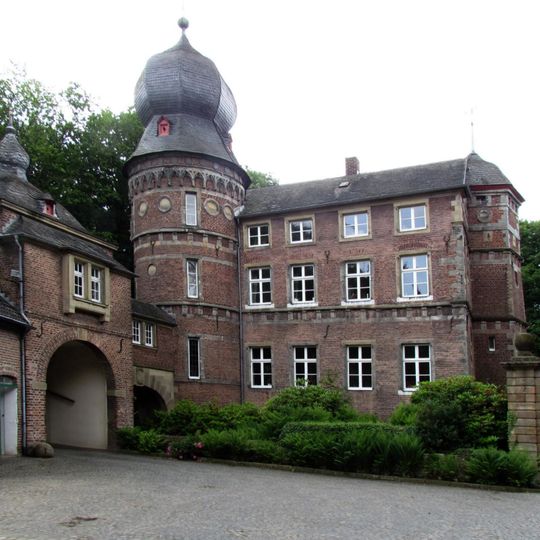
Wasserburg Haus Glehn is a two-part water castle: a three-story brick manor house in Dutch Renaissance style with stone detailing, a round tower with an onion dome at the northeast corner, and a stair tower on the west side. A two-story brick gatehouse with a curved roof stands separate, linked to the manor by connecting wings built in 1912. The surrounding pond is fed by the Jüchener Bach.
The oldest documented names are Widenpesch (1411) and Wydenpesch (1485), referring to a willow meadow; a house here is certain by 1495, when Dietrich Fleck bought the right to build an oil mill behind it. After an older house burned, Dietrich Fleck von der Balen built the present small castle in 1560 in Dutch Renaissance style. He was killed in a raid by Dutch soldiers in 1584, and the estate passed to his son-in-law Gottfried von Neukirchen, called Nievenheim.
The name Fleckenhaus comes from builder Dietrich Fleck von der Balen, who in 1560 called it his "adliges Haus zu Glehn"; older documents name the site Widenpesch (1411) and Wydenpesch (1485), a meadow bordered by willows. A coat of arms with the year 1560 sits above the entrance portal of the manor house.
The grounds are accessible from the outside, though the interior cannot be visited due to residential use. Visitors can appreciate the exterior architecture and moat from the property's perimeter.
The 1912 connecting wings link the two-story brick gatehouse, with its curved hood, to the round tower of the manor house. The moat itself was added to the monument list only on 5 March 1987, after the Rhineland heritage office found the drained ditch to be a defensive feature essential to the site.
The community of curious travelers
AroundUs brings together thousands of curated places, local tips, and hidden gems, enriched daily by 94,447 contributors worldwide.