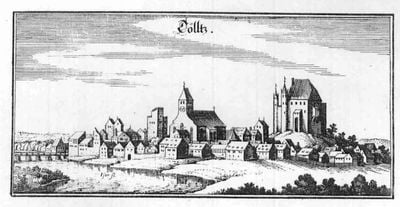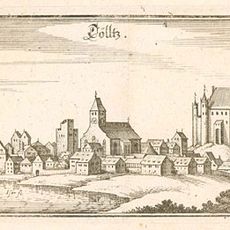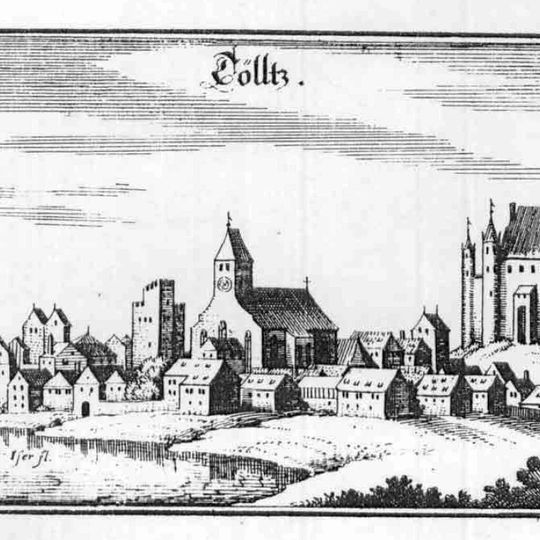
Fürstliches Schloss Tölz, Medieval castle ruins in Bad Tölz, Germany.
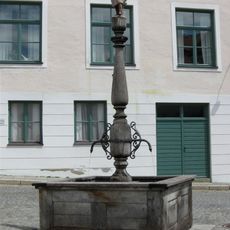
Fürstliches Schloss Tölz was a three-story spur castle built from 1453 to 1460 on a hill spur above the market, between Rehgraben, Schulgraben and a dry valley. A drawbridge led to the gatehouse and an inner bridge to the paved courtyard with its fountain; a large balcony faced south. The chronicler Georg Westermayer listed the Herzogstube, Frauenstube, Jungfrauenstube, Tafelstube, Schreibstüberl, hall and castle chapel among its rooms.
The castle was built around 1460 following a fire that destroyed the earlier fortification on the site. From 1478 it served as an administrative center for Bavarian Duke Albrecht IV.
Herzog Albrecht IV, who lived in the castle from 1478, called Tölz "die Tölzerin" and issued the order of 12 August 1482 from here. The name "Rehgraben" recalls the castle's animal enclosure where deer were kept. The castle garden had a summer house, a pond, fruit trees and vines, tended five times a year by the Munich court gardener Lienhart.
The original site is not publicly accessible today since it is occupied by a kindergarten. Visitors can see the location from outside to understand where the castle once stood within the city.
A drawbridge linked the castle to its gatehouse, while an internal bridge provided passage to the courtyard. This layout reveals how medieval builders designed defensive structures with multiple access points and escape routes.
The community of curious travelers
AroundUs brings together thousands of curated places, local tips, and hidden gems, enriched daily by 94,648 contributors worldwide.