Sebastiansplatz, Square in Altstadt-Lehel, Germany
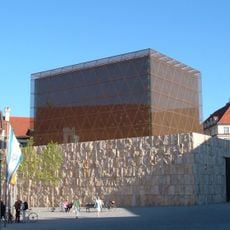
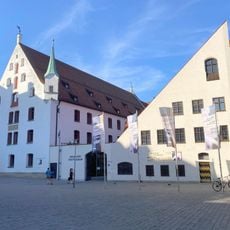
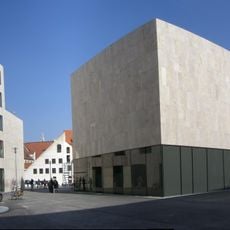
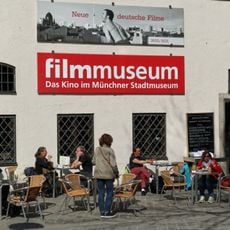
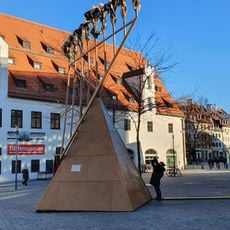
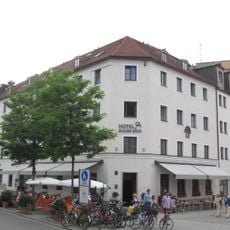
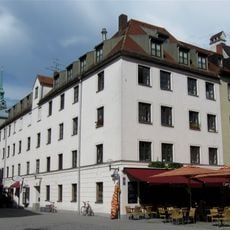
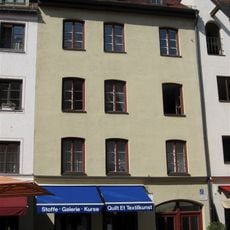
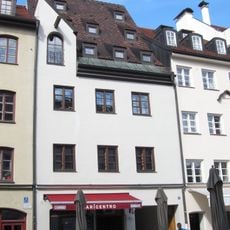
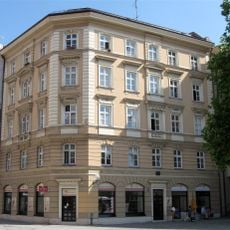
Sebastiansplatz is a roughly 1,600 m² square in Munich's Old Town, paved with granite setts known as Bischofsmützensteine. Its north side is a listed row of one three-storey and five four-storey townhouses, the oldest continuously preserved house row in Munich, rebuilt largely between 1761 and 1890 in Neo-Renaissance style. A five-storey corner building with mansard roof and stucco façade stands to the southeast; the Munich Stadtmuseum lies northwest and the Schrannenhalle southeast.
The area was already developed in the 12th century and lay inside Munich's second city wall, built between 1478 and 1499. The square, roughly its present shape and size of about 1,600 m² on Tobias Volckmer's 1613 city plan, is named after the small late-medieval St. Sebastian chapel on the Anger. That chapel belonged to Ebersberg Abbey, which owned a house there and had the chapel attached to it; shortly after 1806 it was converted into a dwelling. Late-medieval and early-modern settlement layers beneath the square are protected as a ground monument, D-1-7835-0414.
The square is named after the late-medieval St. Sebastian chapel, which belonged to Ebersberg Abbey and stood by a house the monastery owned there. Shortly after 1806 the chapel was converted into a dwelling. Today the square is one of the Old Town's favourite rows of cafés and restaurants.
The square lies just a short walk from Karlsplatz station and is easily reached on foot while exploring the Old Town. The area is pedestrian-friendly with typical cobblestone streets and adjoining shops and cafes.
The square's name comes from the late-medieval St. Sebastian chapel, which stood attached to a house owned by Ebersberg Abbey and was converted into a dwelling shortly after 1806. On Tobias Volckmer's 1613 city plan the square already had roughly its present shape and size of about 1,600 m².
The community of curious travelers
AroundUs brings together thousands of curated places, local tips, and hidden gems, enriched daily by 93,942 contributors worldwide.