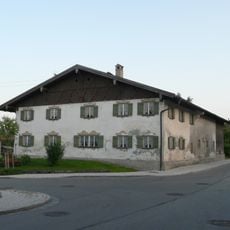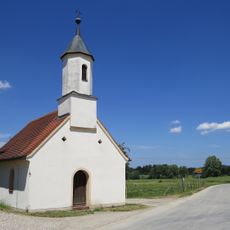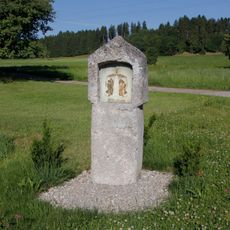
Villa rustica, Archaeological open-air museum in Peiting, Germany.
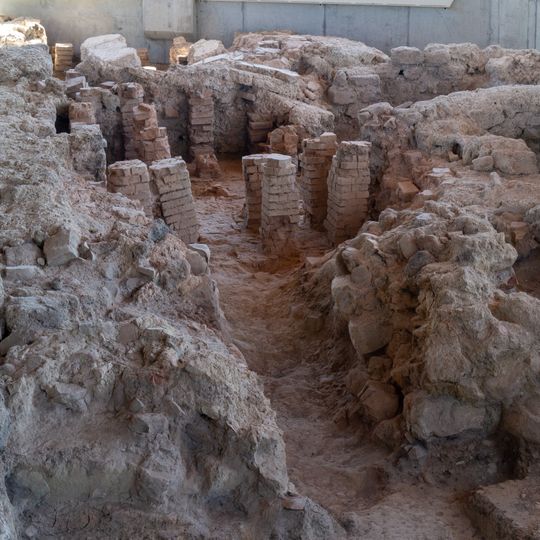
Villa Rustica is an archaeological site in Peiting displaying the exposed foundations of a Roman farmhouse with seven rooms. The layout includes four residential areas, storage spaces, and remnants of a heating system along with ancient water pipes made of lead.
The Romans took the Lech area from the Celtic Likatier around 15 BC under Drusus, and the villa was occupied from the 2nd to the 4th century AD in the province of Raetia. Its remains were found in 1956 on the Neukirchwiesen in the Kreut district of Peiting. Excavations followed in 1956, 1962 and from 1984 to 1989; the hypocaust was uncovered between 2000 and 2004.
The remains reveal how Roman residents organized their daily work around farming and storage tasks. Walking through the foundation layout helps you understand how vital grain storage and resource management were to this household's survival.
Access is via Kreuther Weg, the western branch off the B 17 at the edge of Peiting before the bypass road; the site lies south of the built-up area towards Füssen. The hypocaust is kept in a glazed protective structure and can be viewed in any season. A kitchen and medicinal herb garden with information boards occupies the grounds.
The bath complex's hypocaust, a Roman underfloor heating system, was uncovered between 2000 and 2004 and has stood in a glazed protective shelter since 2012, so it can be viewed in any season. The main building departs from the usual corner risalits of Roman buildings north of the Alps, having two apses instead.
The community of curious travelers
AroundUs brings together thousands of curated places, local tips, and hidden gems, enriched daily by 93,004 contributors worldwide.