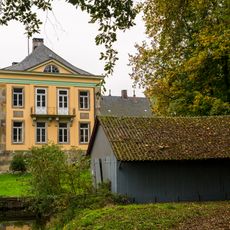
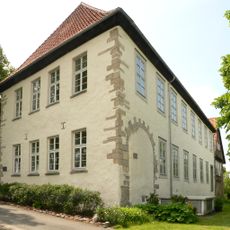
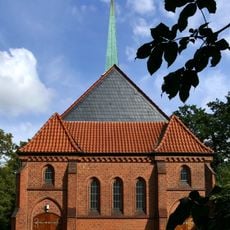
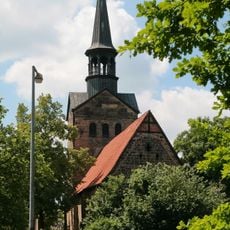
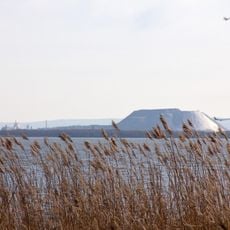
Schacht Weser, Mining shaft museum in Hagenburg, Germany
Schacht Weser is a mine shaft in Altenhagen, now part of Hagenburg, with a mining museum in its former gatehouse. The shaft has a clear diameter of 5.50 metres and reaches a depth of 650 metres; it is lined with tubbing to 167 metres and with masonry below. The museum displays original equipment, minerals, plans, photographs, reconstructed haulage tracks, miners' lamps and mining costumes.
Sinking began in 1909 under the Gewerkschaft Weser, and by 1913 the shaft reached a depth of 650 m, lined with tubbings to 167 m and masonry below. From April 1914 a 2,500 m drift on the 500 m level linked it to the Sigmundshall mine, serving as a ventilation shaft and second exit. It never entered production; the potash proved insufficient in quantity and quality, and in 1923 the owners closed the unproductive works.
The shaft connects to the region's industrial past and shows how demanding underground work was for miners. The displayed tools and photographs tell the story of workers who labored here daily.
Access requires advance appointment due to safety considerations of this historic site. It is best to confirm beforehand which areas are accessible and whether special equipment is needed.
The shaft never went into production: after test workings in 1918 the potash layers proved too thin and poor for the Kali-Syndikat, and the mine was shut in 1923. From 1933 its spoil heap was dug away and used as backfill below the 535-metre level of the Sigmundshall mine.
The community of curious travelers
AroundUs brings together thousands of curated places, local tips, and hidden gems, enriched daily by 92,708 contributors worldwide.