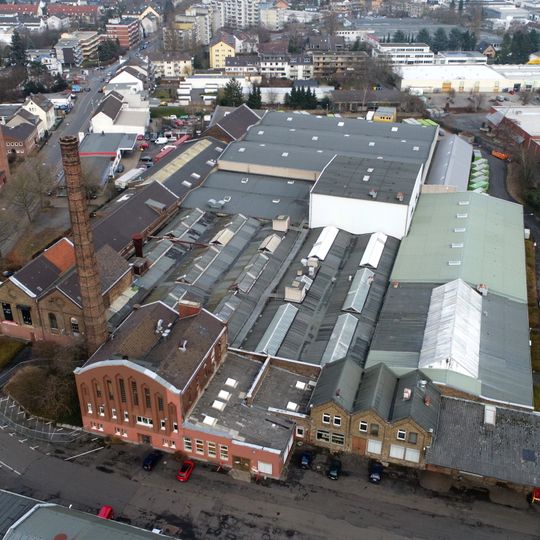
Halle Beuel, Cultural heritage monument in Beuel district, Bonn, Germany.
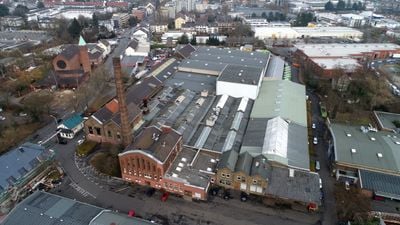
Halle Beuel is a former jute spinning and weaving factory complex at Siegburger Straße 42 in Beuel-Ost, Bonn. The listed ensemble consists of several connected factory buildings; one hall was converted into two variable theatre spaces of 160 to 400 seats that could be combined into a single large stage.
The factory was founded in 1868, producing jute goods and later floor coverings, and ceased production in 1980 after several changes of ownership. The city of Bonn then took over the site at Siegburger Straße 42 to reorganise its theatre venues. From 1981, under Jean-Claude Riber and Peter Eschberg, the halls were converted; the theatre opened on 5 October 1984.
The name comes from the Jutespinnerei und Weberei, a jute spinning and weaving mill founded in 1868 that later made floor coverings. Since the 1980s the city has used the halls for theatre; the main stage seats about 450, 150 of them on a tiered rear gallery. The site also houses the Beuel volunteer fire brigade station, built in 1986.
The complex stands at Siegburger Straße 42 in Beuel-Ost; the theatre hall itself is a rented venue, so the interior is only open to ticket holders during performances. The grounds also house the Beuel volunteer fire brigade station, in use since 1986. The former factory buildings and workshops can be viewed from the street.
The hall's stage machinery was built so the entire stage space could be rebuilt for each production, which meant plays had to be performed en suite. The 1,100-square-metre factory hall holds about 450 spectators, 150 of them on a tiered rear gallery. The Pantheon signed a 30-year lease running to 31 October 2046.
The community of curious travelers
AroundUs brings together thousands of curated places, local tips, and hidden gems, enriched daily by 93,906 contributors worldwide.