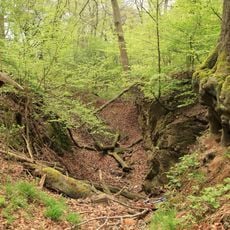
Erlenhöhle, Natural monument cave in Schwelm, Germany
The Erlenhöhle is a natural cave near Schwelm that stretches roughly 263 meters through limestone formations with multiple chambers showing varied mineral compositions. The passages display different rock structures that reflect the geological diversity of underground formations.
The cave was discovered in 1902 during a fox hunt and later became an important refuge during World War II. Schwelm residents used it as a shelter during bombing raids.
The cave gained literary attention through Franz Josef Degenhardt's 1974 novel 'Zündschnüre', which was later adapted into a film. This portrayal embedded the site in the region's cultural memory.
Access to the cave is restricted and requires special permission and protective equipment, as the entrance is secured with a gate. Protection of the sensitive underground ecosystem is the priority.
Despite its modest size, the cave houses numerous animal species including bats and aquatic organisms documented in 1980s studies. This underground community demonstrates how stable and productive cave ecosystems can be.
The community of curious travelers
AroundUs brings together thousands of curated places, local tips, and hidden gems, enriched daily by 91,440 contributors worldwide.