Klarissenkloster Pfullingen, Medieval monastery in Pfullingen, Germany
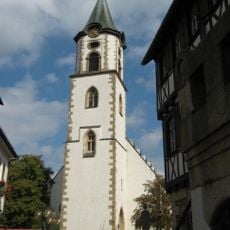
The Klarissenkloster Pfullingen is a monastery complex featuring a church with early Gothic elements, including wall paintings and a preserved communication grill from the 13th century. The compound contains residential, functional, and prayer spaces arranged according to monastic needs.
Construction began on 11 November 1250, according to a 1525 chronicle by an unnamed Poor Clare, who names Mechthild and Irmel von Pfullingen as founders. On 21 October 1252 Pope Innocent IV received the women into the Order of Poor Clares and imposed the rule of Cardinal Hugolin. Nuns from Söflingen arrived on 16 November 1252, and the community moved into the completed monastery on 25 November 1278. The last surviving nun converted to Protestantism around 1590, ending the convent.
The monastery was dedicated to Saint Cecilia, and the nuns followed the Rule of Urban IV from 1263, which fixed the order's name after Clare of Assisi. Conversations with outsiders were only allowed with the abbess's permission, watched by two fellow sisters at the speaking grill, and even confession and communion took place through that opening.
Only a few buildings of the former monastery survive, among them the Klosterkirche and the medieval parlatorium with its speaking grill. The sources give no opening times or visitor arrangements, so confirm locally before travelling. The site lies in Pfullingen in Baden-Württemberg, south of Stuttgart.
The original communication grill from the founding era survives to this day, revealing how nuns spoke with visitors while maintaining their enclosed way of life. This detail illustrates the tension between strict seclusion and necessary contact with the outside world.
The community of curious travelers
AroundUs brings together thousands of curated places, local tips, and hidden gems, enriched daily by 94,347 contributors worldwide.