Komturei Lietzen, Medieval monastery in Lietzen, Germany
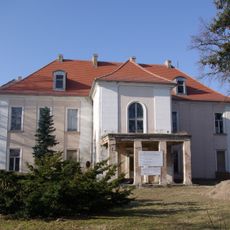
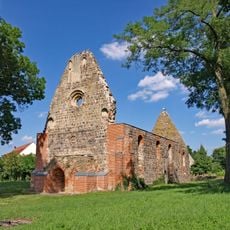
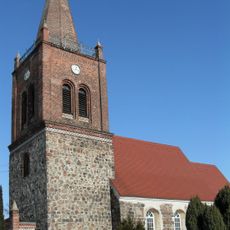
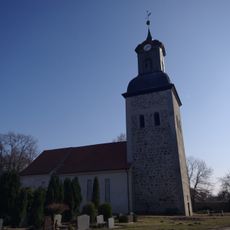
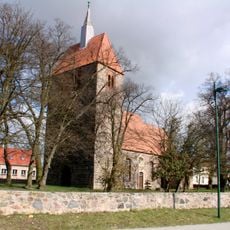
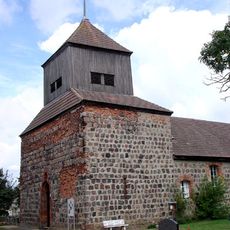
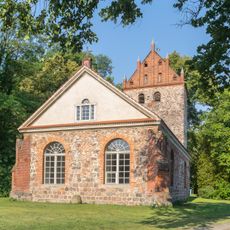
Komturei Lietzen is a former Templar commandery on a raised site with a fish pond to the southeast. Its church is a fieldstone hall building of three bays with a five-sided choir and late Gothic star vault; the two-storey fieldstone manor house with hipped roof stands east of it, and fieldstone perimeter walls from the late 13th century enclose about 20 hectares.
Lietzen is first documented in 1244 in a tithe agreement with the Bishop of Lebus, though the commandery probably existed by 1229. After the Templars were dissolved in 1312, the Order of Saint John took over the estate in 1318. Secularisation brought it to Prussia in 1812, and in 1814 King Frederick William III gave it to Chancellor Karl August von Hardenberg.
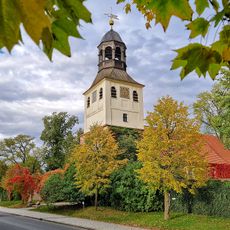
The Komtureikirche holds a pulpit altar from around 1710, flanked by figures of Moses and John the Baptist, with the coats of arms of the von Schlieben and von Wolff families. A floating baptismal angel dates from 1730, and three bells were cast in Stettin in 1698. The church belongs to the Open Churches network.
Parts of the grounds and the church are open to visitors, though it is best to check ahead which areas are accessible on your visit. Guided tours can often be arranged in advance to learn more about the site's history.
The oldest datable object in the church is a limestone incised grave slab for Magister Johannes de Neundorf, who died in 1276; it is set into the south wall and is considered the earliest of its kind in the region. Three bells were cast in 1698 by Johann Jakob Mangold of Stettin, and a tower clock with a stone weight was made in 1791 by M. Wangerin of Küstrin.
The community of curious travelers
AroundUs brings together thousands of curated places, local tips, and hidden gems, enriched daily by 94,524 contributors worldwide.