Deutsches Kartoffelmuseum, Potato museum in Fußgönheim, Germany
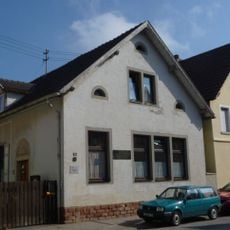
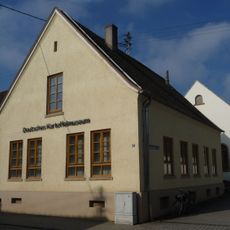
The Deutsches Kartoffelmuseum in Fußgönheim, in the Rhein-Pfalz-Kreis near Ludwigshafen, is run by the non-profit association Deutsches Kartoffelmuseum Fußgönheim e. V., whose members work on a voluntary basis. One of its buildings is the Fußgönheim synagogue, erected in 1842. The displays cover the botany, breeding and origin of the potato and its spread, especially its cultivation in the Palatinate and in Prussia under Frederick the Great.
The museum is run by the non-profit association Deutsches Kartoffelmuseum Fußgönheim e. V., whose members work on a voluntary basis. One of its buildings is the Fußgönheim synagogue, erected in 1842. The exhibits cover the botany, breeding and origin of the potato and its spread, especially its cultivation in the Palatinate and in Prussia, where King Frederick the Great (1712–1786) promoted it.
The museum's displays trace how the potato reached the Palatinate and how King Frederick the Great of Prussia (1712–1786) promoted its cultivation. The volunteer association Deutsches Kartoffelmuseum Fußgönheim e. V. runs the house, and admission is free.
The museum is run by the non-profit association Deutsches Kartoffelmuseum Fußgönheim e. V., whose members work on a voluntary basis, so opening times depend on them and should be checked before travelling. Admission is free. The museum occupies the former synagogue built in 1842 in Fußgönheim, near Ludwigshafen.
The museum is one of only three potato museums in Germany, alongside those in Munich and Stremlow. Its 1842 building is the former Fußgönheim synagogue, and the museum is run by volunteers of the non-profit association Deutsches Kartoffelmuseum Fußgönheim e.V.
The community of curious travelers
AroundUs brings together thousands of curated places, local tips, and hidden gems, enriched daily by 93,916 contributors worldwide.