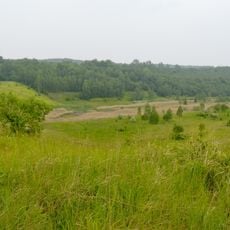
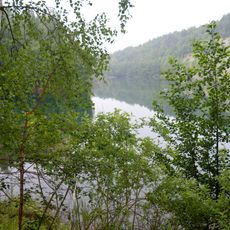
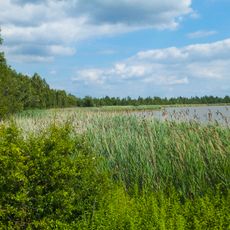
Kalksteinbruch Salzgitter-Salder, Limestone quarry at Hasselberg in Salder, Germany
The Kalksteinbruch Salzgitter-Salder is a disused limestone quarry covering about 12 hectares, with a length of nearly 750 metres along the strike of the layers. The exposed sequence is around 200 metres thick and consists of light-coloured, fine-grained limestones (82–92% CaCO3) alternating with darker marl layers. The strata dip about 70° to the north-northeast.
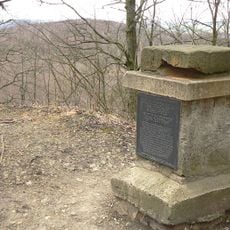
In 1995 the Cretaceous Subcommission of the International Commission on Stratigraphy chose the quarry as the main candidate for the global boundary stratotype of the Coniacian, the third stage of the Upper Cretaceous. The marker was fixed as the first appearance of the inoceramid bivalve Cremnoceramus deformis erectus. The exposed sequence spans the Middle Turonian to Lower Coniacian, about 93.9 to 85.7 million years old.
The site shows geological layers that reveal how the earth was formed over millions of years. Visitors can observe these natural records in the exposed rock walls during guided visits.
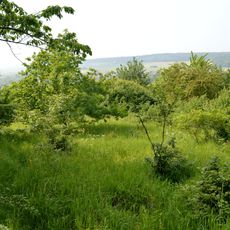
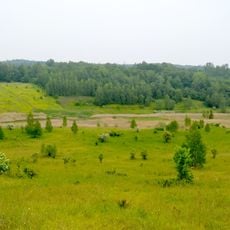
The quarry lies about 600 m south of Salder on the northeastern slope of the Hasselberg, in the northern Lichtenberge range. Its northwest section is overgrown and hard to reach, while the rest is steep, rocky ground. Sturdy shoes are needed; access is not open to the general public.
In 1995 the quarry was chosen as the main candidate for the global boundary stratotype of the Coniacian, the third stage of the Late Cretaceous. The marker is the first appearance of the inoceramid bivalve Cremnoceramus deformis erectus. The site was preferred for its apparently gap-free sequence and its exceptionally complete record of inoceramid faunas.
The community of curious travelers
AroundUs brings together thousands of curated places, local tips, and hidden gems, enriched daily by 93,974 contributors worldwide.