Lichtenberg Castle, Castle ruin in Salzgitter, Germany.
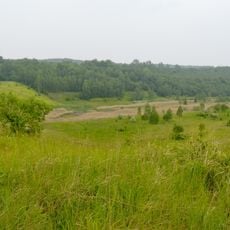
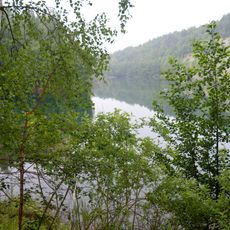
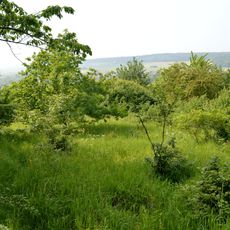
Lichtenberg Castle is a ruined fortification perched on a hill near Salzgitter in Lower Saxony, where thick stone walls remain partially intact. The site spreads across wooded terrain and offers views across the surrounding landscape.
Lichtenberg Castle is first documented in 1180, when Henry the Lion used it against Frederick Barbarossa, who captured it that same year; it returned to the Welfs in 1194. Otto IV held a court assembly here in 1204 and minted coins inscribed MONETA REGIS OTTONIS IN LEGT(ENBERG). In 1552 troops of the Schmalkaldic League under Count Vollrad of Mansfeld destroyed it with heavy cannon, after which it served as a quarry.
The ruins reveal how medieval strongholds were constructed and laid out, with thick wall sections still rising from the wooded slope. Visitors can observe the practical design choices that made such fortifications effective for controlling the surrounding territory.
The climb to the ruins follows marked hiking trails through the forest, with parking available at the base of the hill. The terrain can be uneven and slippery, especially after rain, so sturdy footwear is advisable.
The castle well was dug by hand to a depth of about 60 metres and has a diameter of 3 metres. Since 2005 a replica trebuchet, a medieval catapult engine, has stood on the castle site. The tower rebuilt around 1900 on the old hexagonal foundations carries a wooden viewing platform about 25 metres up, from which the Harz Foreland and the Brocken can be seen.
The community of curious travelers
AroundUs brings together thousands of curated places, local tips, and hidden gems, enriched daily by 92,692 contributors worldwide.