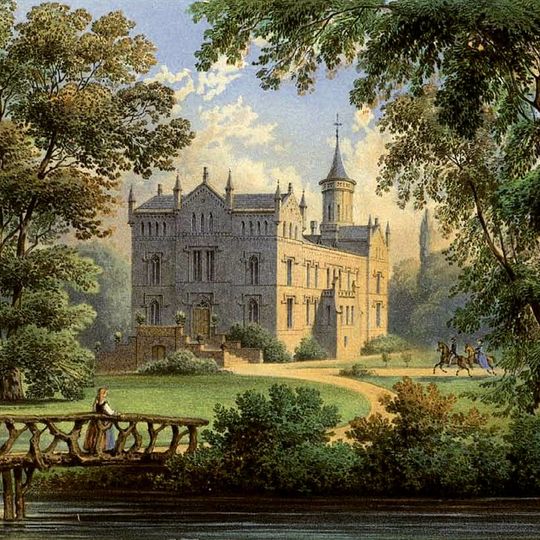
Schloss Kropstädt, Château in Lutherstadt Wittenberg, Germany
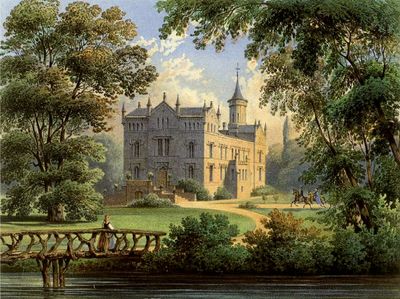
Schloss Kropstädt is a two-storey, rendered brick building on a souterrain, with two unequal risales and balconies on the narrow sides and facing the farmyard. It was rebuilt between 1855 and 1856 by Friedrich Adolf Karl von Leipziger to plans by Berlin architect Friedrich Hitzig in the English Neo-Gothic style, replacing an earlier castle demolished in 1842. The building stands at the southwestern edge of the village and is surrounded by a ten-hectare landscape park, probably laid out around 1850, with a valuable stock of trees.
The site was originally settled around 1150 and was rebuilt in the 16th century after being destroyed in the 14th century. In the 19th century the property received its current classical form through major renovations.
The castle reflects local building traditions and shows how the lifestyle of nobility changed over centuries in this region. Its design blends German and English-classical elements, telling a story of cultural exchange between different areas.
The castle is located near Wittenberg in flat countryside that is easy to reach by car or public transport. Access to the grounds may be limited as the property is privately owned, so it is best to check conditions beforehand.
During the German Democratic Republic, the building served as a children's home and later as a care facility for mothers and infants before becoming a hotel after reunification. This transformation shows how the property adapted to very different social purposes across different political periods.
The community of curious travelers
AroundUs brings together thousands of curated places, local tips, and hidden gems, enriched daily by 92,683 contributors worldwide.