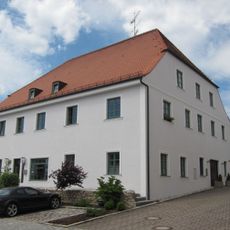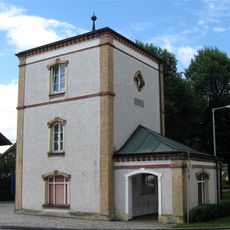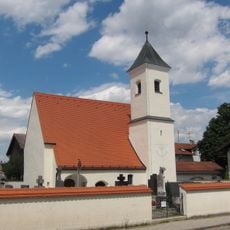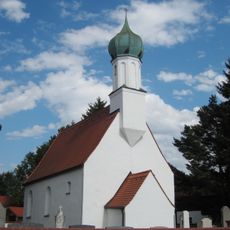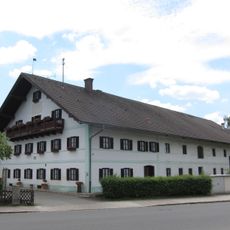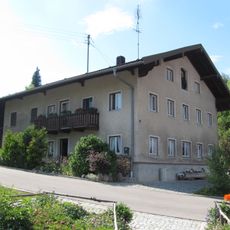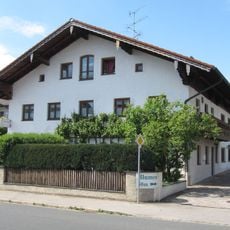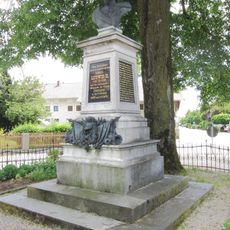
Staatsatelier Thorak, Architectural heritage monument in Vaterstetten, Germany.
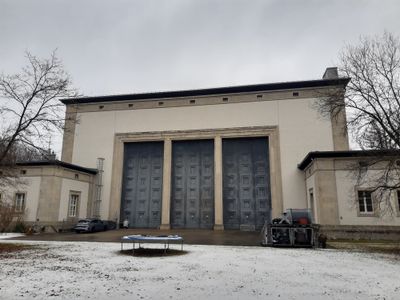
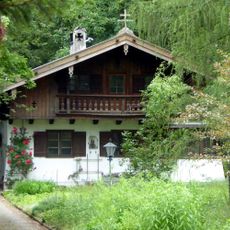
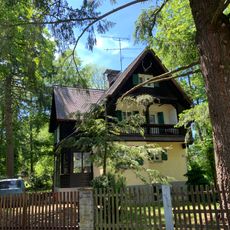
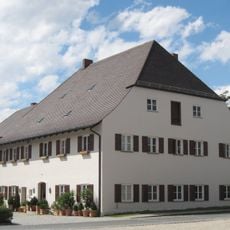
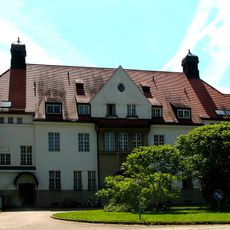
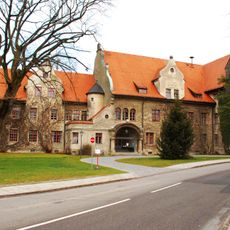
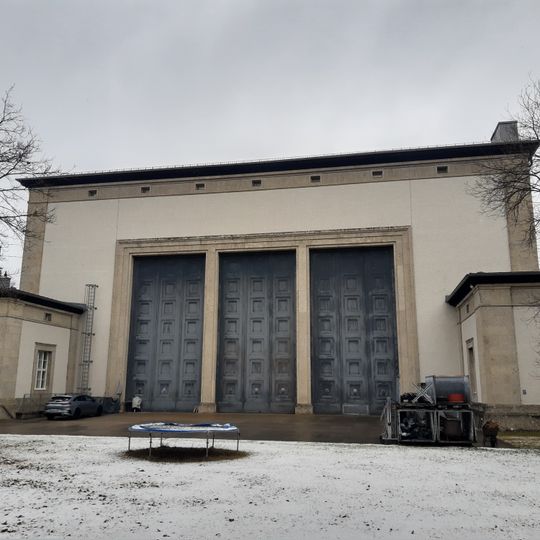
The Staatsatelier Thorak is a listed building in Vaterstetten, Bavaria, built in 1941 to designs by Albert Speer as a studio complex for the sculptor Josef Thorak. It consists of a large main hall with a black marble floor and a glass roof, along with several outbuildings on the same site.
The building was commissioned by the Nazi regime in 1941, which promoted Thorak as an official state artist and provided him with this studio. On May 5, 1945, it became the site of the surrender negotiations for Army Group G, one of the last major events of World War II in southern Germany.
The name of the building comes from the sculptor Josef Thorak, who worked here during World War II and produced sculptures on an unusually large scale. The main hall was built specifically to accommodate oversized works, and its proportions still reflect that original purpose today.
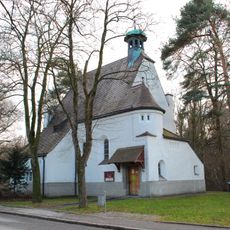
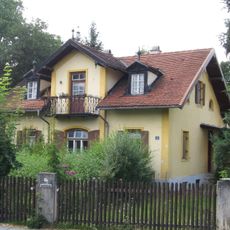
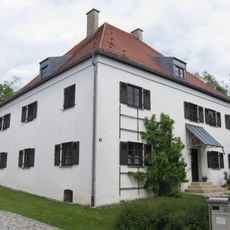
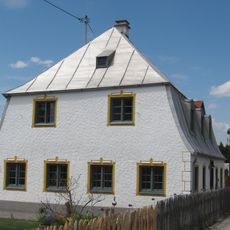
The site is not open to visitors, as it currently serves as a storage facility for the Archaeological State Collection. The exterior of the building can be seen from the road, which gives a sense of its scale and architecture.
Between 1954 and 1962, the halls were used as a film studio where German cinema productions were shot. After that, until 1983, the Bavarian State Opera stored stage sets and props here, making the building a behind-the-scenes space for two very different art forms.
The community of curious travelers
AroundUs brings together thousands of curated places, local tips, and hidden gems, enriched daily by 60,000 contributors worldwide.