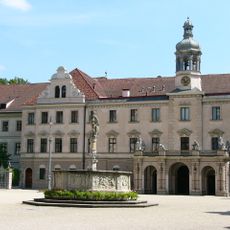
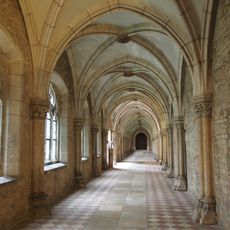
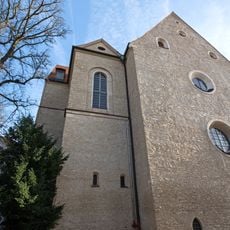
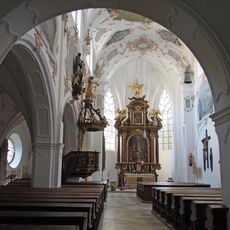
Cultural heritage monuments in Regensburg: Fürst-Anselm-Allee, Heritage avenue in Regensburg, Germany.
Fürst-Anselm-Allee is a ringway circling Regensburg's Old Town built on the sites of former medieval city walls. The path is lined with large trees and offers green lawns with views of the historic buildings that surround it.
A prince from the Thurn und Taxis family created this avenue in the late 1700s to turn medieval fortifications into a green strip for public use. This transformation reflected a new way of thinking about how cities could repurpose old defensive structures.
The avenue bears the name of Prince Karl Anselm von Thurn und Taxis, who financed its planting from 1779 to 1781; a 1779 council decree fixed the name, and a commemorative medal was struck with his portrait. Residents were long used to grazing goats and sheep, drying laundry and gathering wood on the ground, so the council imposed heavy penalties and even threatened to shoot grazing animals.
The avenue is open year-round and can be explored on foot or by bicycle at a relaxed pace. Benches and shaded spots beneath old trees are scattered throughout, offering plenty of places to rest and take in the surroundings.
The avenue's course still traces Regensburg's medieval city wall: it was laid out 40–50 m in front of the then intact wall, on the strip of ten decayed outer works. Prince Karl Anselm financed it himself between 1779 and 1781; 50 men and 4 carters worked two years on the earthworks, and the total cost exceeded 12,000 gulden.
The community of curious travelers
AroundUs brings together thousands of curated places, local tips, and hidden gems, enriched daily by 92,653 contributors worldwide.