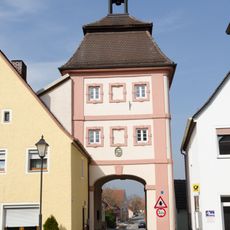
Ehemaliges Seckendorffisches Schloss, Castle and architectural heritage monument in Bechhofen, Germany.
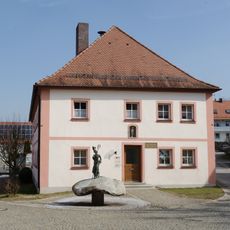
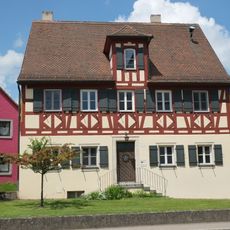
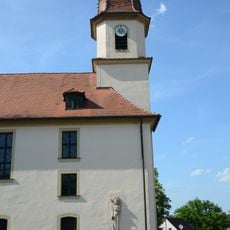
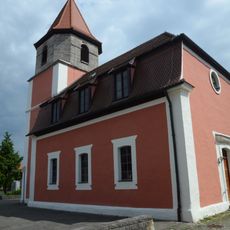
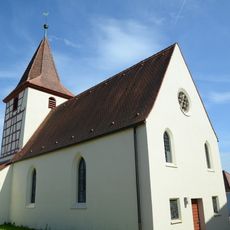
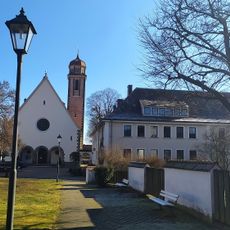
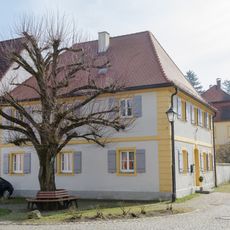
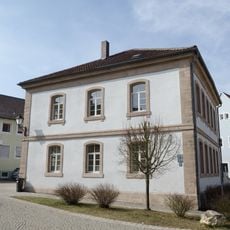
The former Seckendorff castle is a two-storey building with a hipped roof, a dormer and a curved gable, standing at the south-western edge of Bechhofen an der Wieseth. Its west long side carries a richly ornamented portal with pilasters, a broken triangular pediment and decorative balls, and the facade is divided by pilaster strips and cornices. A 19th-century farm building belongs to the estate.
Bechhofen is first documented in 1311. From 1410 the lords of Seckendorff-Pfaff held the village and resided in the castle until their line died out in 1617, when the fief reverted to the margraves of Ansbach, who set up a bailiwick office there. The present building dates from the 17th and 18th centuries; the castle is now privately owned.
The Seckendorff-Pfaff family held Bechhofen and its castle from 1410 until their line died out in 1617, when the fief passed to the Margraves of Ansbach, who set up a bailiwick office there. The building is now privately owned, so its noble use survives only in the name and the heraldic-era portal on the west front.
The castle stands at the southwestern edge of Bechhofen an der Wieseth in the Ansbach district of Middle Franconia. It is in private ownership, so the building and its 19th-century economy building are seen from outside only; the west facade with its portal faces the street.
The medieval water castle that preceded the present building has left no known trace of its appearance; the sources record only that the site began as a Wasserburg. What stands today is a 17th/18th-century two-storey house with a hipped roof, a gable dormer and a curved gable, plus a 19th-century farm building.
The community of curious travelers
AroundUs brings together thousands of curated places, local tips, and hidden gems, enriched daily by 94,593 contributors worldwide.