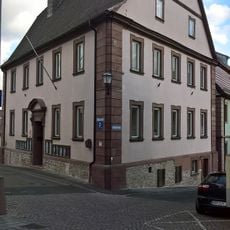
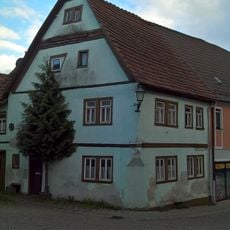
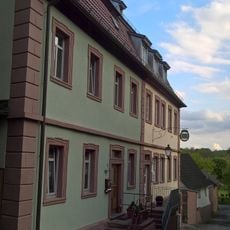
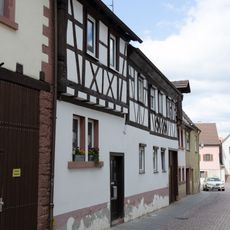
Schloss, Architectural heritage monument in Triefenstein, Germany.
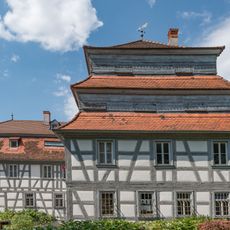
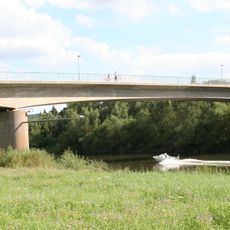
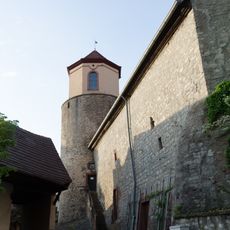
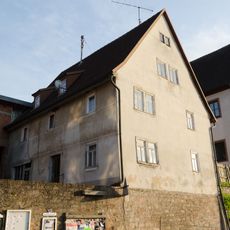
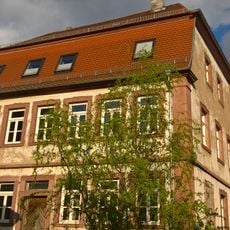
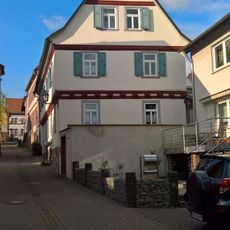
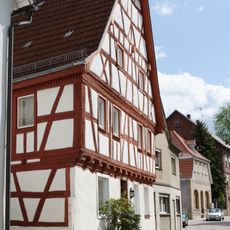
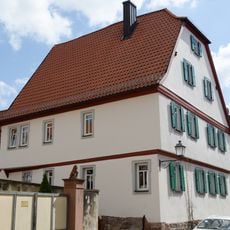
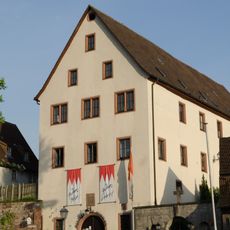
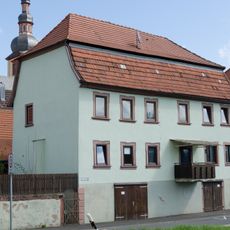
Schloss Homburg is a three-storey, three-winged building with jettied half-timbered upper floors, built in 1568 on an irregular T-shaped plan and covered by saddle, hip, mansard and shed roofs. Its round bergfried, the Hoher Turm, stands apart and carries an octagonal top with tall arched windows added in the 18th century. A triple arch bridge leads to the complex from the village side.
A Frankish border fort stood here in the 6th century, and in the 8th century the Frankish kings built a secondary castle as a traffic and trade base. By the late 10th century the Homburg belonged to the Bishopric of Würzburg, which enfeoffed the Counts of Wertheim; from 1102 it was a castle estate of Triefenstein Abbey. In the 12th century the Lords of Hohenburg built a new structure. In the late 15th century Bishop Rudolf von Scherenberg bought back the Wertheim holdings for 15,500 guilders, and in 1568 a palace-like building replaced the defensive castle.
Since 1999, Elvira Lantenhammer and musician Michael Günther have run the art project "Kunst in Schloss Homburg", with a summer academy in painting, drawing, photography and performance. Artist Linda Schwarz keeps her studio and print workshop in another wing, so the former knight's castle now serves as a working art venue.
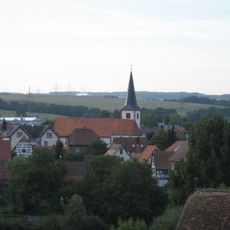
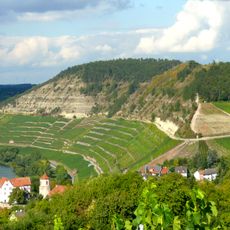
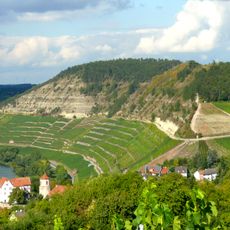
The site is reachable on foot from the village center and sits on elevated ground with good views over the surroundings. It is recommended to wear sturdy shoes, as the paths cross uneven terrain and the grounds consist of older stone structures.
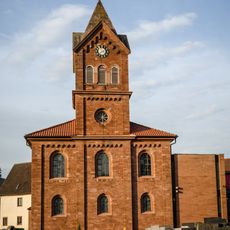
The round keep, called Hoher Turm, stands apart from the main building and was given an octagonal top with tall arched windows and a steep roof in the 18th century. A lion's head with a long protruding tongue juts from its wall as a Neidfigur, a figure meant to ward off envy.
The community of curious travelers
AroundUs brings together thousands of curated places, local tips, and hidden gems, enriched daily by 94,035 contributors worldwide.