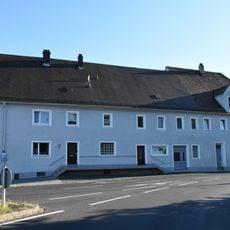
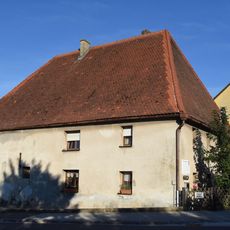
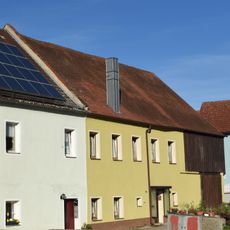
Ehemaliges Schlösschen Franziskaruhe, später Werkskasino der Maxhütte, Cultural heritage monument in Sulzbach-Rosenberg, Germany.
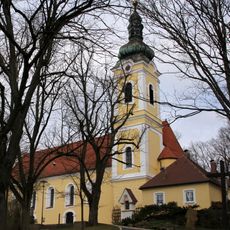
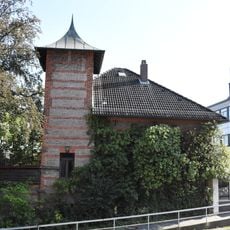
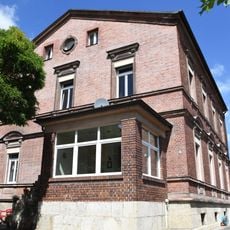
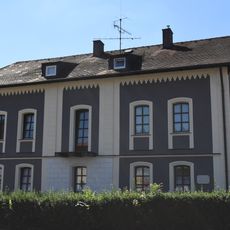
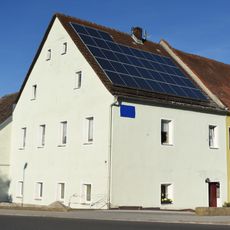
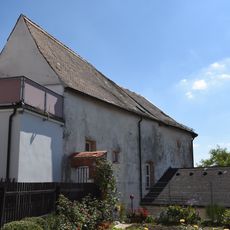
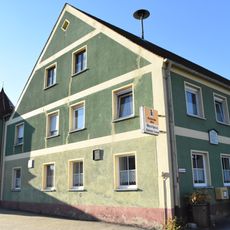
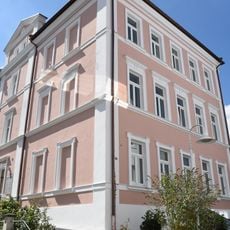
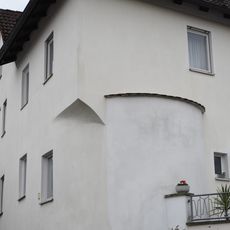
Schloss Franziskaruhe is a three-wing complex below the Rosenberg Schlossberg: a two-storey plastered central block with two massive corner pavilions, baroque window frames, a large hipped roof and a rear altane. Single-storey hipped-roof wings flank it; the south wing has a small turret, the north wing stands detached. A 1920 garden pavilion with mansard roof opens through pillars on two sides.
Maria Franziska Dorothea Christina, Palatine Countess and mother of later King Maximilian I Joseph, had the pavilion built; it was completed in 1785 and first called Franziskaruhe on 27 July 1786. In 1788 it was enlarged, probably using stone from Rosenberg castle ruins. After her death in 1794 it passed to Amberg mayor Michael Girisch, then in 1805 to French émigré Karl von Malcomes. Maxhütte bought it in 1922; on 7 April 1934 the merger of Sulzbach and Rosenberg was decided in its hall. It was thoroughly renovated in 1964 and again in 2011.
The building shifted from a noble residence to a social meeting place for industrial workers, revealing how industrial communities repurposed aristocratic estates for their own needs.
The building stands below the Rosenberg Schlossberg, above Rosenberg, and is reached on foot from the town. Since 2018 a kindergarten has used part of it, and the Bavarian State Office for Monument Protection is seeking a buyer through its property exchange, so interior access is not guaranteed. The 1920 garden pavilion with its mansard roof can be seen from the grounds.
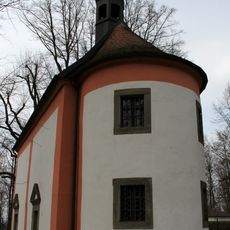
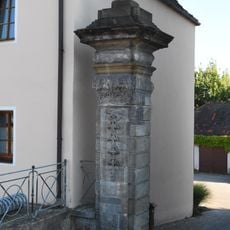
The garden holds a pavilion built in 1920, a mansard-hipped-roof structure open on two sides through pillars. It is separate from the 1785 summer house and shows how the grounds were later furnished as a setting for the estate.
The community of curious travelers
AroundUs brings together thousands of curated places, local tips, and hidden gems, enriched daily by 92,652 contributors worldwide.