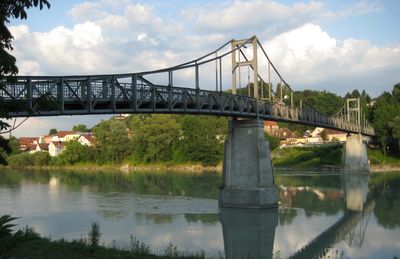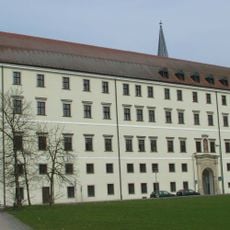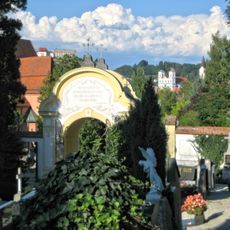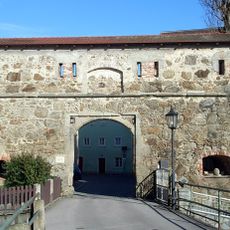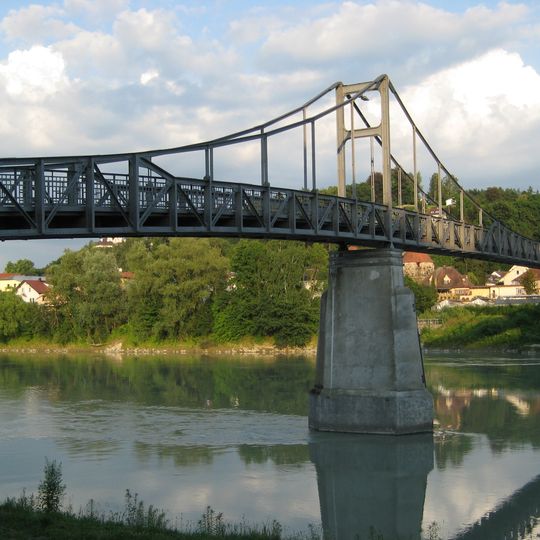
Fünferlsteg, Pedestrian and bicycle bridge across Inn River in Passau, Germany.
Fünferlsteg is a pedestrian and bicycle bridge made of steel and concrete spanning the Inn River in Passau. It connects the eastern and western sections of the city, forming a continuous crossing for all types of traffic.
In February 1908 pharmacist Paul Egger initiated a citizens' association to build a footbridge, since the city could not fund it. The Passauer Innsteg AG was founded on 23 December 1912 with 170,000 Mark capital, half from the city. Delayed by wartime shortages, the bridge opened on 2 October 1916 with a toll of 5 pfennigs, hence the name Fünferlsteg. Blown up on 3 May 1945, it reopened on 29 August 1947; the city took it over on 1 October 1973 and tolls ended.
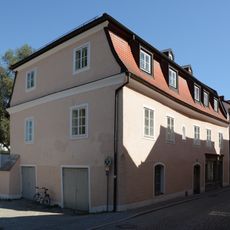
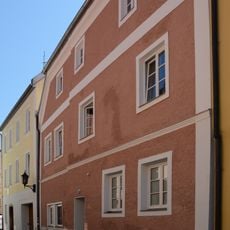
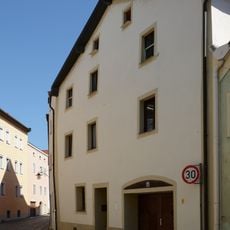
Locals call it Fünferlsteg after the five-pfennig toll charged at the wooden toll house on the north end, a two-storey hipped-roof building that still stands. The bridge was funded by a joint-stock company, the Passauer Innsteg AG, founded in 1912; tolls ended when the city took over in 1973.
The bridge is open 24 hours to pedestrians and cyclists, providing direct routes to shopping areas and residential neighborhoods. The crossing is straightforward, flat, and easy to navigate between the two sides of the city.
The bridge's popular name, Fünferlsteg, comes from the five-pfennig toll charged at a small toll house on the north end from 1916; the two-storey hipped-roof building still stands and is a protected monument. The toll rose to ten pfennigs in 1959 and was abolished when the city took over the bridge on 1 October 1973.
The community of curious travelers
AroundUs brings together thousands of curated places, local tips, and hidden gems, enriched daily by 94,500 contributors worldwide.