Villa Bischoff, Protected villa in Vegesack, Germany
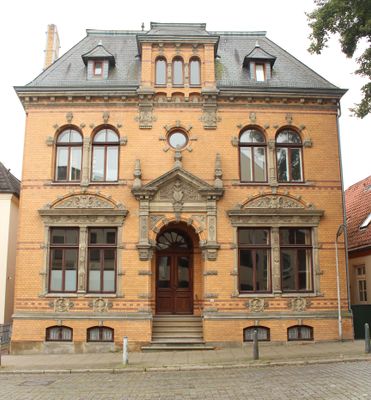
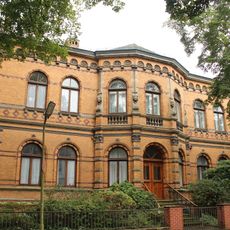
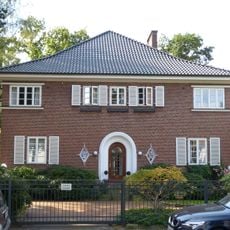
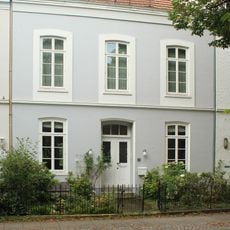
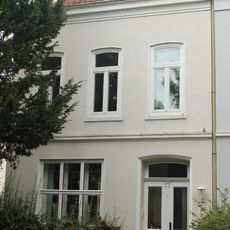
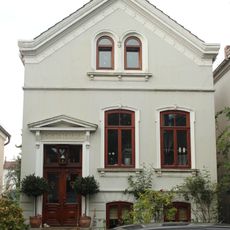
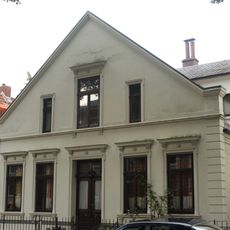
Villa Bischoff is a two-story brick building with a five-axis facade, mansard roof, and an octagonal turret crowning the structure at Weserstraße. The house spans three floors with rooms featuring architectural details including wooden panels and carved decorative elements.
The villa was built in 1886/87 for shipowner Johann Diedrich Bischoff (1823–1893) to designs by Ludwig Klingenberg and Hugo Weber. His son Friedrich Bischoff moved in after marrying Marie Danziger, and the house was her wedding gift. In 1910 Friedrich sold it to Elisabeth Lange, widow of merchant Johann Lange; their descendants lived there, and it was listed as a monument in 1984.
The name of the ground-floor Argo room refers to the ship Argo, fitting for a house built for shipowner Johann Diedrich Bischoff. Its carvings were made by the Vegesack sculptor Nikolaus Bunkenborg, and the large salon has high-quality wood panelling. The curved staircase links these rooms.
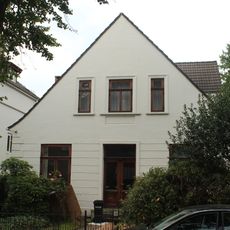
The building is visible from the street and shows clear architectural features of a wealthy residence from this period. Visitors should view it from different angles to appreciate the facade details and tower structure fully.
Per Leo, a great-grandson of Heinrich Leo, made the house a main character in his novel Flut und Boden (2014). The book follows his grandfather Friedrich and Friedrich's elder brother Martin, an "utterly dissimilar pair of brothers" who spent their childhood in the villa.
The community of curious travelers
AroundUs brings together thousands of curated places, local tips, and hidden gems, enriched daily by 94,586 contributors worldwide.