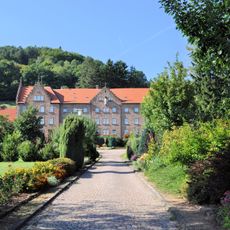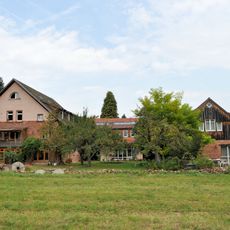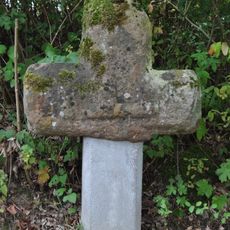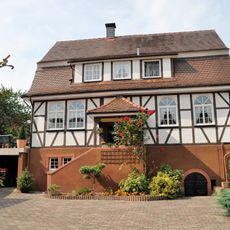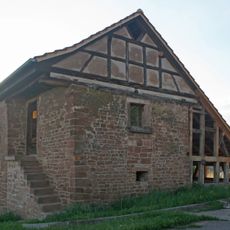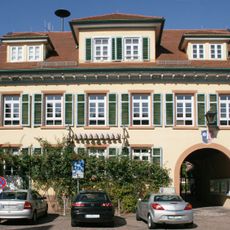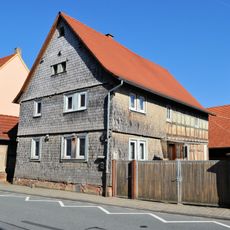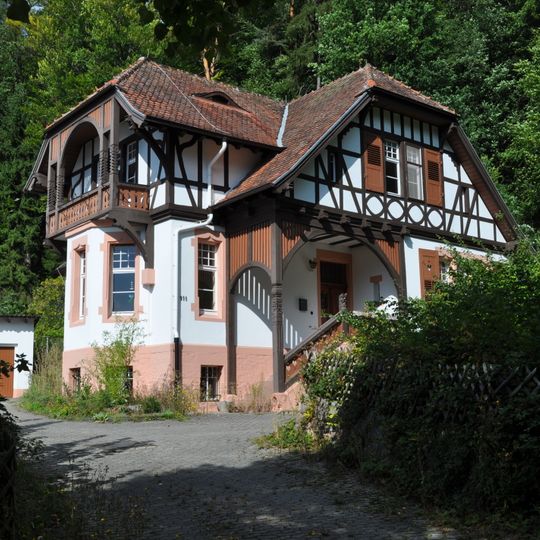
Ernst-Ludwig-Heilstätte, Historical sanatorium in Sandbach, Germany.
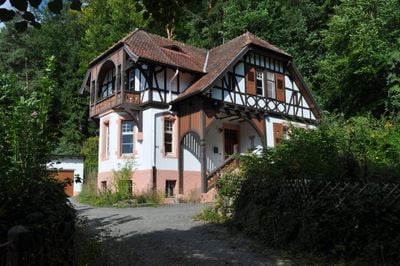
Ernst-Ludwig-Heilstätte is a medical facility dating to around 1900 with a long facade featuring three gabled staircases and architectural details from that era. The grounds also included agricultural buildings with vegetable gardens and stables that supported the facility's self-sufficiency.
The facility opened in 1901 as a treatment center for tuberculosis patients under the management of Invalidenversicherungsanstalt Großherzogtum Hessen. It embodied a new approach that promoted spacious, work-focused layouts as the path to modern medical care.
The complex reflects early twentieth-century ideas about healing through structured work and organized routines. Visitors can still see how the spatial layout and building design shaped the daily life and treatment approaches of that era.
The complex sits on spacious grounds with several building groups, and you can best navigate it by following the main axes. Comfortable shoes are recommended since the grounds are extensive and involve considerable walking.
The complex was designed by Victor von Weltzien, who directed the Hessian state construction administration and oversaw the project for Berlin architects Gropius & Schmieden. His design already showed forward-thinking ideas about connecting building layout with healing effects.
The community of curious travelers
AroundUs brings together thousands of curated places, local tips, and hidden gems, enriched daily by 60,000 contributors worldwide.