Kraftwerk Tullnau, Historic power station in Nuremberg, Germany.
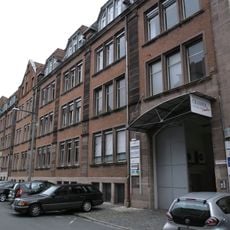
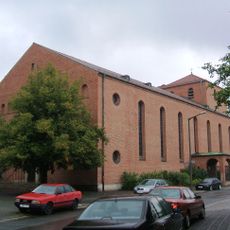
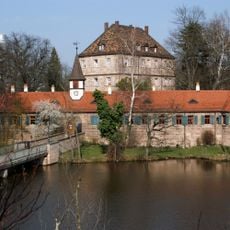
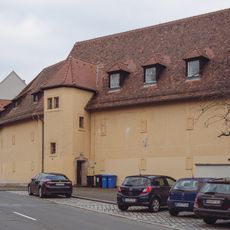
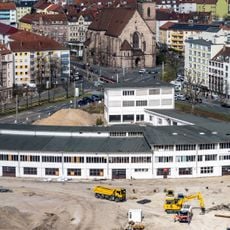
Kraftwerk Tullnau is a power station in Nuremberg featuring prominent brick architecture with large window openings and a distinctive smokestack. The main building contains the former dynamo hall, which once housed the generating equipment and now serves different purposes.
Oskar von Miller drew up the concept for a public power supply in 1893, and the city council chose alternating current in February 1894. Schuckert & Co. received the contract on 2 March 1895; the plant went into operation in March 1896 at a construction cost of 1.2 million marks. After the Gebersdorf plant of the Großkraftwerk Franken AG started on 19 April 1913, the Tullnau works was shut down.
The name Tullnau comes from the district where the plant stood, chosen for coal deliveries by the neighbouring railway lines and water for the steam boilers. After the dynamo hall closed in 1913, the Städtische Werke used the buildings, and a "Kabelmuseum" (cable museum) was housed there before its collection passed to the Museum Industriekultur. The hall now serves as a kindergarten.
Only the Dynamohalle survives; the boiler house, head building and staff dwellings were demolished in 2011, so look for the single remaining hall rather than a complete plant. The hall now houses a kindergarten, so it is not open to visitors during operating hours. The site lies in the Tullnau area beside the railway lines that once brought coal.
The Deutsches Museum's high-voltage section in Munich uses the plant as an example of early AC electrification: a cutaway model shows it as commissioned, and a display board traces its history and Nuremberg's distribution network. The surviving Dynamohalle was converted into a kindergarten after 2011.
The community of curious travelers
AroundUs brings together thousands of curated places, local tips, and hidden gems, enriched daily by 94,478 contributors worldwide.