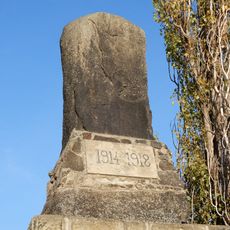
Lehof, Natural sandstone monument north of Quedlinburg, Germany
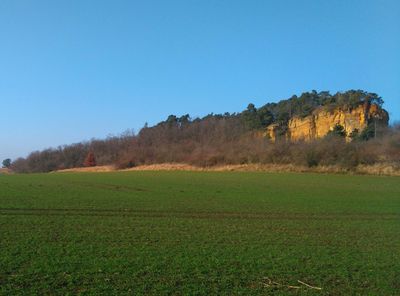
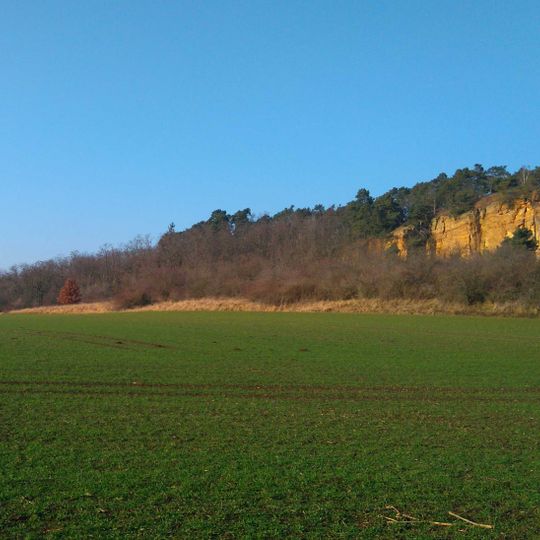
Lehof is a 176.3-metre sandstone rock northeast of Quedlinburg, made of thick-bedded Involutussandstein from the Upper Cretaceous Coniacian. Quarrying cut its eastern slope into a steep rock wall, while the plateau is mainly covered with pines and below the cliffs grow robinias and birches. From the eastern edge of the plateau the view reaches the northern Harz foreland and, to the south, Quedlinburg and the Harz.
Sandstone was quarried at this location until the 1930s, when workers uncovered Bronze Age artifacts including swords and rings during excavation. These discoveries reveal that the area saw human settlement in ancient times.
A medieval watchtower once stood at the northeastern edge of this formation as part of Quedlinburg's defense system. The elevated position made it valuable for protecting the city below.
The Lehof lies northeast of Quedlinburg, with the A 36 motorway passing just to its north. The rock is a protected natural monument, so stay on existing paths and leave the sandstone and vegetation untouched. The plateau is mainly covered with pines, and the eastern side drops as a steep rock wall shaped by former quarrying.
The name was originally Leho, meaning burial mound; the added "f" suggests a farm that never existed. A Bronze Age hoard found at the rock's foot in 1930, including a sword and jewellery rings and chains, is now largely in the Schlossmuseum Quedlinburg.
The community of curious travelers
AroundUs brings together thousands of curated places, local tips, and hidden gems, enriched daily by 94,649 contributors worldwide.