Neisse viaduct in Görlitz, Railway viaduct in Görlitz, Germany
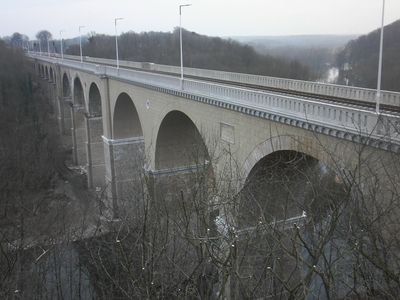
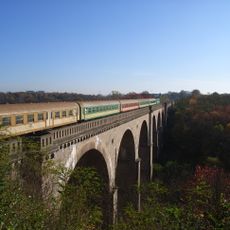
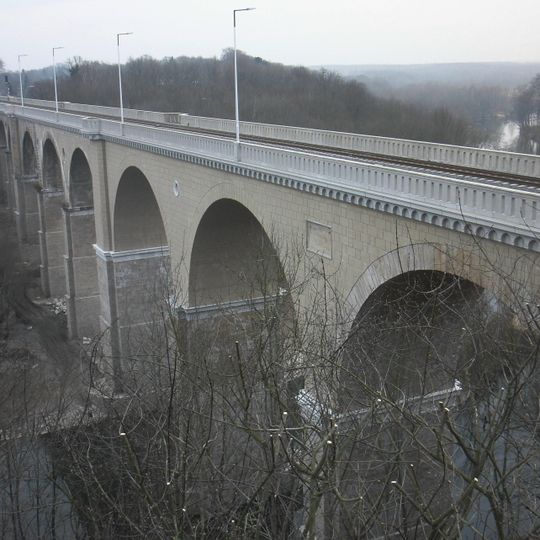
The Neisse viaduct is a railway bridge spanning 475 meters across the Lusatian Neisse river, connecting Görlitz in Germany with Zgorzelec in Poland. The structure features thirty rounded arches built from local reddish granite with white sandstone railings running along its length.
Construction began in 1844 and was completed in 1847 to carry the Lower Silesian-Mark Railway Company's line across the Neisse river. The work by master mason Gustav Kießler established it as one of the first major railway structures of its kind in Germany.
The structure embodies the shared history of two nations, with the engineering work serving as a tangible link between German and Polish communities on either side. The viaduct frames how residents and visitors experience the river and the border landscape today.
The viaduct is easy to visit on foot and can be approached from either the German or Polish side of the river. The best views of the structure are from below along the riverbank or from the walking paths on both approaches.
The structure rises about 35 meters above the river and represented a remarkable technical achievement for its era, signaling modernization of rail infrastructure in Europe. Its durable design with granite arches has allowed it to survive largely unchanged to the present day.
The community of curious travelers
AroundUs brings together thousands of curated places, local tips, and hidden gems, enriched daily by 91,068 contributors worldwide.