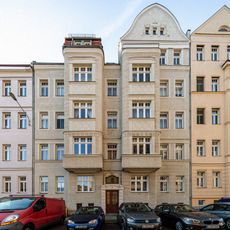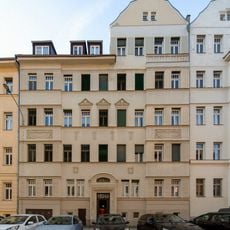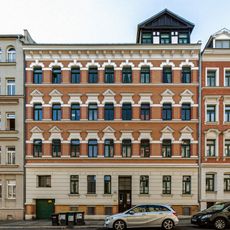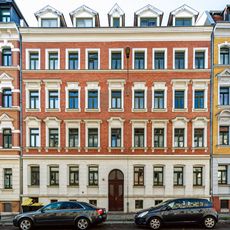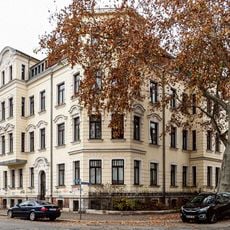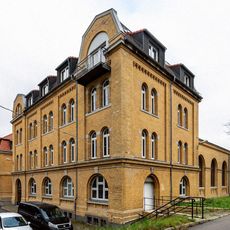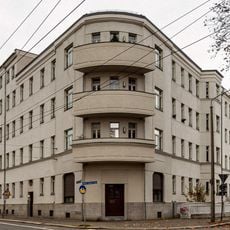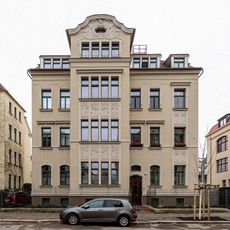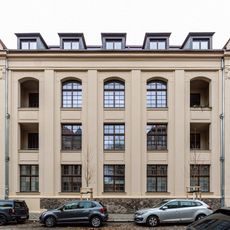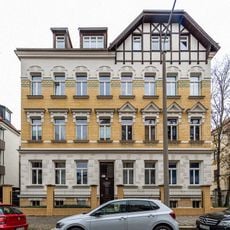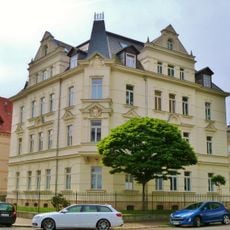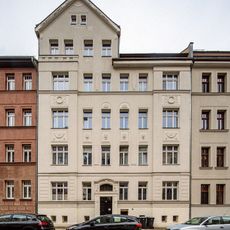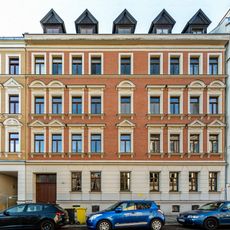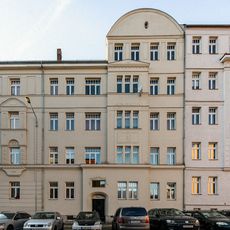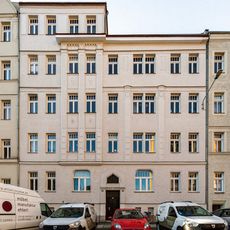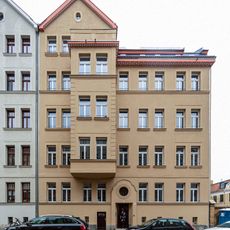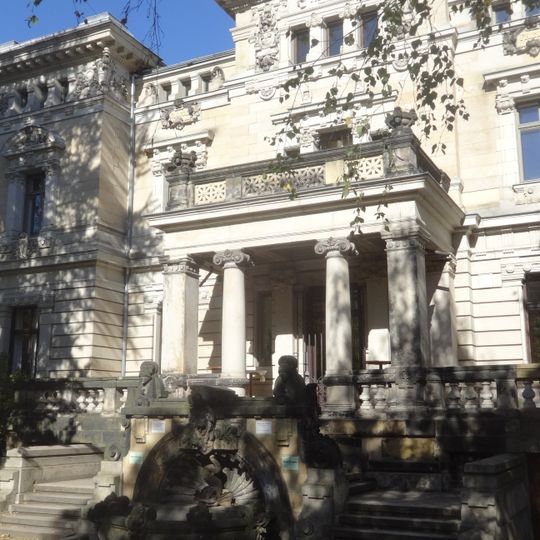
Budde-Haus, Cultural heritage villa in Gohlis, Germany.
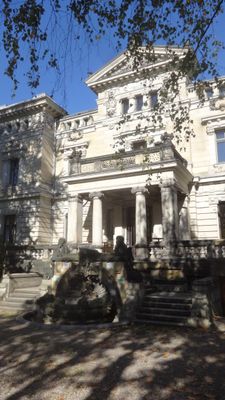
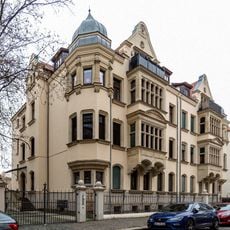
Budde-Haus is a villa built in 1890–91 for the Bleichert family, designed by the Leipzig architects Pfeifer & Händel and executed by Eduard Steyer. Its main facade combines Postelwitz and Cotta sandstone with marble, stucco and gilded ornament; the central bay carries Ionic columns, and the gable bears the inscription "Villa Hilda". A flat roof now replaces the former glass dome, and the southeast corner with its winter-garden pavilion was destroyed in 1945.
The building was constructed in 1891 as a private residence for the Bleichert family. After World War II, its purpose changed and it eventually became a cultural center.
The name honours Heinrich Budde, the VEB Verlade- und Transportanlagen Leipzig director after whom the house was named when it opened as a Klubhaus on 11 August 1956. The Villa Hilda inscription on the central gable recalls Adolf Bleichert's wife Victoria Emilie Hildegard; the building is still called Villa Hilda as well as Bleichert-Villa.
The Budde-Haus stands at Lützowstraße 32 in Gohlis, north of the city centre; the villa sits opposite the former Bleichert factory site. The building is a listed monument, so the historic rooms and the ornamental fountain on the main façade are best viewed during opening hours of the cultural centre. The house is run by FAIRbund e. V. since January 2017.
The central gable of the main facade bears the inscription "Villa Hilda", a reference to Victoria Emilie Hildegard Bleichert, the builder's wife. The house is still known by this name as well as Bleichert-Villa.
The community of curious travelers
AroundUs brings together thousands of curated places, local tips, and hidden gems, enriched daily by 92,785 contributors worldwide.