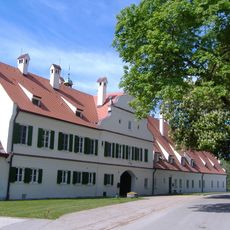
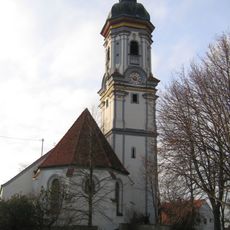
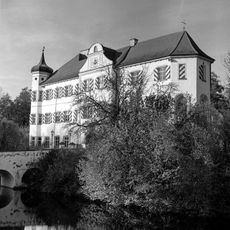
Haus im Moos, Heritage building in Donaumoos, Bavaria, Germany.
Haus im Moos opened in 1998 in Kleinhohenried as a museum, education and conference centre. Its main building holds seminar and exhibition rooms with changing displays on the settlement of the Donaumoos and the local history museum of the Kulturhistorischer Verein Donaumoos. Outside, historic buildings moved to the site include the Rosinger Hof, a colonist's house built in 1795 or 1796 in Rosing with a half-timbered gable and clay ceilings in the parlour.
The Haus im Moos opened in 1998 in Kleinhohenried, combining a museum with an education and conference centre. Its exhibits document the colonists' struggle to drain and farm the Donaumoos, which began in the late 18th century. The open-air grounds gather historic buildings moved to the site, among them the Kolonistenhof, built in Rosing in 1795 or 1796, and the Hofstetter-Anwesen, transferred from Grasheim in 1994.
The building displays how people lived and worked in this moorland, with exhibits about traditional crafts and farming methods. Visitors see the central role agriculture played for the community and how closely daily life was connected to the natural environment.
The site is accessible with guided tours and digital resources available through a museum application. Visitors can explore exhibition areas both indoors and in the open spaces around the building.
The site documents how people created artificial drainage systems to make the wet landscape habitable and usable. This engineering achievement made settlement possible in an area that was naturally unsuitable for human life.
The community of curious travelers
AroundUs brings together thousands of curated places, local tips, and hidden gems, enriched daily by 94,649 contributors worldwide.