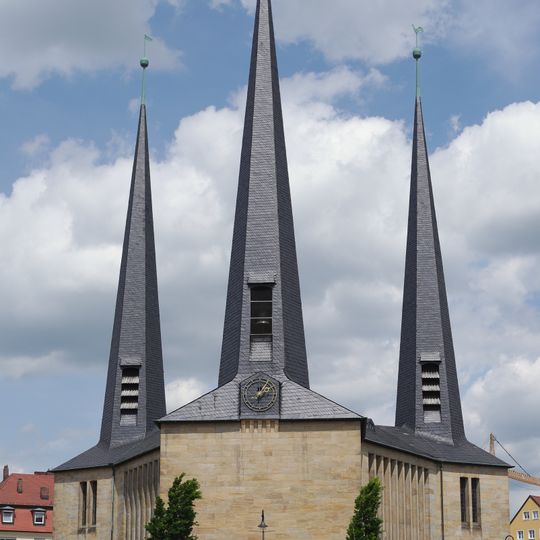
Christuskirche, Lutheran church at Wilhelmsplatz, Bayreuth, Germany
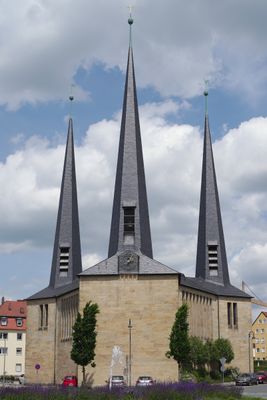
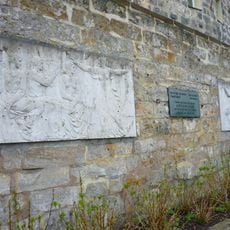
Christuskirche is an evangelical-Lutheran church on Wilhelmsplatz, consecrated in 1956. Its hexagonal central hall is enclosed by high sandstone walls, with four annexes around it and three tower spires rising above. The altar is a sandstone slab on two relief-carved blocks, and the gilded copper cross bears an ebony corpus with the four evangelists.
Plans for a church in this district date to the late 19th century: a church building association was founded in 1899 and a plot purchased. The First World War postponed the project and inflation wiped out the donations. The houses on the three plots where the church and parsonage now stand were destroyed on 5 April 1945; the cleared land was bought, Karl Pfeiffer-Haardt was commissioned, and the foundation stone was laid on 7 November 1953. The church was consecrated on 6 May 1956 and became independent of the St. Georgen parish in 1958.
The church was consecrated on 6 May 1956 and became independent from the St. Georgen parish in 1958. Its furnishings carry old-Christian symbols: a pelican and sheep with a shepherd's staff on the altar base, an eagle on the pulpit, and a tapestry by Rudolf Yelin showing the risen Christ above the globe since 1966.
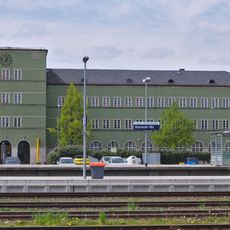
The church sits conveniently between the main railway station and the Festspielhaus, making it easy to reach on foot. The sandstone walls help block out traffic noise from the surrounding Wilhelmsplatz area, creating a quieter interior space.
The church was consecrated on 6 May 1956, and its architect was Karl Pfeiffer-Haardt, who was commissioned after the houses on the three plots at Wilhelmsplatz were destroyed on 5 April 1945. The foundation stone was laid on 7 November 1953, and the parish separated from St. Georgen in 1958.
The community of curious travelers
AroundUs brings together thousands of curated places, local tips, and hidden gems, enriched daily by 92,704 contributors worldwide.