Gedenkstätte Silberbergtunnel, World War II memorial tunnel in Bad Neuenahr-Ahrweiler, Germany.
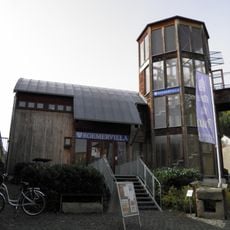
The Silberbergtunnel is a 660-meter-long tunnel running through the Silberberg mountain and equipped with reconstructed wooden structures at its eastern entrance. The site features pathways that allow visitors to move through the different areas and understand the layout where people sheltered.
The tunnel was originally planned for railway use starting in 1910 but was never completed for that purpose. During World War II, it provided shelter for thousands of civilians escaping Allied air raids in the final years of the war.
The tunnel's shelters were called "Büdchen", wooden huts that each housed up to 20 people and carried house numbers, and the settlement even had its own post office. A central lane, named Adolf-Hitler-Allee, was kept clear for bicycle traffic through the middle of the tunnel.
The memorial lies at the eastern portal of the Silberbergtunnel, directly on the Rotweinwanderweg (Red Wine Trail). The open-air site was created by the Heimatverein Alt-Ahrweiler, which cleared the overgrown tunnel entrance and rebuilt some of the former huts. Access is on foot; the grounds are not described as barrier-free.
The tunnel was never opened for rail traffic: construction of the strategic railway embankment began in 1910 but was halted in 1923. French engineers blew up the tunnel in 1947. The memorial at the eastern portal was opened on 3 July 2004 by the Heimatverein Alt-Ahrweiler, after volunteers cleared the overgrown entrance and rebuilt some of the huts.
The community of curious travelers
AroundUs brings together thousands of curated places, local tips, and hidden gems, enriched daily by 93,477 contributors worldwide.