Sachsenhausen concentration camp memorial, Memorial and museum in Oranienburg, Germany.
The Sachsenhausen Memorial and Museum occupies the site of the former Sachsenhausen concentration camp in Oranienburg, north of Berlin. Its decentralized concept links 13 permanent exhibitions to specific historical locations across the grounds, covering the Oranienburg camp of 1933–34, the Sachsenhausen camp, the Soviet Special Camp No. 7/No. 1, and the memorial's own history. The largest exhibition, "Medicine and Crime" in barracks R I and R II, covers 800 m² with about 100 exhibits.
The site was founded in 1936 as a concentration facility that imprisoned over 200,000 people throughout the Nazi period. The camp became a place where thousands died from starvation, disease, and systematic killings, making it central to the history of Nazi persecution.
The memorial runs 13 permanent exhibitions tied to specific historical locations, from the Oranienburg camp of 1933–34 and the Sachsenhausen camp to the Soviet Special Camp No. 7/No. 1 of 1945–1950. Since 2006 the police university of Brandenburg has used rooms on the grounds, and its students attend commemorations here.
Entry to the memorial is free and audio guides are available in several languages for self-guided exploration of the grounds. Guided tours are offered but require advance planning, so it is helpful to contact the site beforehand if you want organized interpretation.
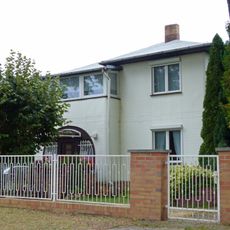
The memorial's grounds also hold the Hochschule der Polizei des Landes Brandenburg, whose teaching and administration rooms have stood on the former camp site since 2006. Students and trainees attend joint seminars with the memorial, and police staff take part in its commemorations. The memorial's own exhibitions trace the site's history from the Oranienburg camp through the Soviet special camp to the memorial itself.
The community of curious travelers
AroundUs brings together thousands of curated places, local tips, and hidden gems, enriched daily by 93,527 contributors worldwide.