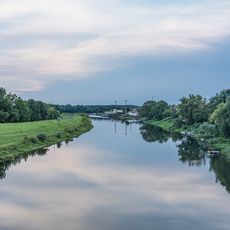
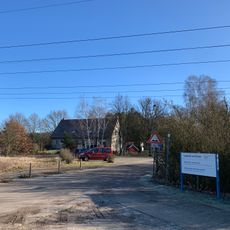
Wernsdorfer See, Protected lake in Königs Wusterhausen and Gosen-Neu Zittau, Germany.
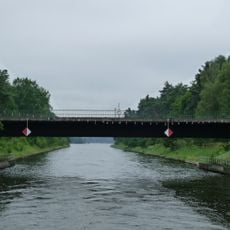
Wernsdorfer See is a 138.74-hectare nature reserve in the Berlin-Fürstenwalder Spreetal lowland, spanning the Oder-Spree and Dahme-Spreewald districts. Its shallow lake, about 75 hectares and mostly 0.8 to 1.5 metres deep, lies within Königs Wusterhausen's boundary near Wernsdorf. Fed by a spring and two streams, it connects via the Oder-Spree Canal to the Krossinsee.
People have settled in the area since the Middle Stone Age, with Slavic populations arriving in later periods. The region demonstrates multiple layers of human presence spanning several millennia.
The lake serves as habitat for waterfowl and reed-dwelling birds that visitors commonly observe here. The shoreline reed beds create natural shelters for various animal species that characterize the water ecosystem.
The water body is accessible for various recreational activities, though some areas may be restricted due to protection measures. Visitors should follow local guidelines and respect the natural environment.
Between 1950 and 1956, Berlin's waste was dumped into the lake, shrinking its surface by about a quarter to roughly 75 hectares. Conservationists stopped the practice in 1956, and the reserve was designated on 19 October 1967. A landfill opened east of the lake in the 1950s and was closed in 2005 for lack of a base seal.
The community of curious travelers
AroundUs brings together thousands of curated places, local tips, and hidden gems, enriched daily by 94,514 contributors worldwide.